
Power station or generator: which do you need?
How they compare for winter outages, how to size one, and the safety rules that matter.
- Power station: a big rechargeable battery. Silent, no fumes, safe indoors, but limited capacity.
- Generator: burns fuel and runs as long as you refill it, but must stay outdoors, far from the house.
- Portable generators are linked to about 100 carbon monoxide deaths a year in the U.S., according to the Consumer Product Safety Commission.
General consumer information, not electrical advice. Connecting any backup power to your home’s wiring requires a transfer switch or interlock installed by a licensed electrician.
Winter storms can knock out power for hours or days. If you’re deciding how to keep the lights, phone, Wi-Fi, fridge, or medical devices running, the two most common choices are a portable power station and a fuel-powered generator. They solve different problems, and picking the wrong one is either expensive or dangerous.
What each one is
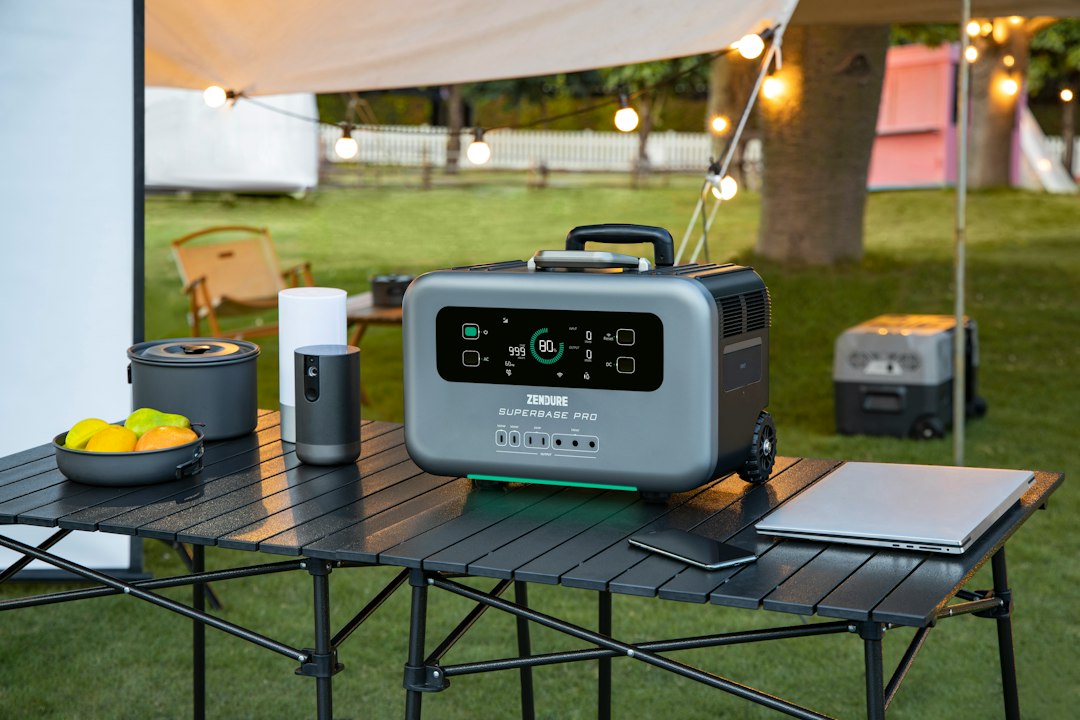
A portable power station is a large lithium battery with built-in outlets, USB ports, and an inverter. You charge it ahead of time from a wall outlet, and some can recharge from a car or portable solar panels. It makes no noise or exhaust, so you can use it right next to your bed or on the kitchen counter.
A portable generator runs an engine on gasoline, propane, or both. It can produce more power for longer, as long as you have fuel. Inverter generators are quieter and produce cleaner power for electronics; conventional generators are louder but often cheaper per watt.
Side-by-side comparison
| Portable power station | Portable generator | |
|---|---|---|
| Where you can use it | Indoors or outdoors | Outdoors only, far from doors and windows |
| Noise and fumes | Silent, no exhaust | Loud; produces carbon monoxide |
| How long it runs | Until the battery is empty; hours to a day or more for small loads | As long as you have fuel |
| Power for big appliances | Limited by battery size and output | Larger models can run a fridge, sump pump, and furnace fan together |
| Recharging or refueling | Wall outlet, car, or solar panels | Gasoline or propane, stored safely |
| Maintenance | Top up the charge every few months | Oil changes, fuel stabilizer, regular test runs |
| Best for | Phones, Wi-Fi, lights, CPAP, laptop, short outages | Long outages, larger loads, rural homes |
How to size a power station
Power stations list two numbers: capacity in watt-hours (Wh), how much energy it stores, and output in watts (W), how much it can deliver at once. You need enough output to start your devices and enough capacity to run them as long as you need.
The 0.85 accounts for conversion losses. Check each device’s label for its watts.
Two examples:
- Staying connected: Wi-Fi router (about 15 W) + LED lamp (10 W) + phone charging (15 W) = about 40 W. A 1,000 Wh station would run that for roughly 21 hours (1,000 × 0.85 ÷ 40).
- Keeping food cold: many modern refrigerators use roughly 1 to 2 kWh a day. A 2,000 Wh station could keep a typical fridge running for about a day. Check that the station’s output can handle the fridge’s startup surge.
If anyone uses a CPAP or other powered medical device, check the device’s watts and ask the manufacturer about battery use. Running a CPAP without its heated humidifier usually extends runtime considerably.

What to check before buying a power station
- Capacity (Wh): 500 Wh or so for phones and lights; 1,000–2,000 Wh if you want to run a fridge or a CPAP overnight.
- Continuous and surge output (W): must exceed the total of what you’ll run at once, plus startup surges for fridges and pumps.
- Pure sine wave inverter: safer for sensitive electronics and medical devices.
- Battery type: LiFePO4 (lithium iron phosphate) is commonly rated for thousands of charge cycles and is heavier; other lithium types are lighter but usually rated for fewer cycles.
- Recharge options and speed: wall, car, and solar input, and how many hours a full wall charge takes.
- Pass-through or UPS mode: lets it power devices while plugged in and switch over automatically when the grid fails.
- Outlets, weight, and warranty: enough AC outlets for your essentials, light enough to move, and a multi-year warranty.
Prices vary widely and sales are frequent. Small units often cost a few hundred dollars, while 1,000–2,000 Wh models commonly run from several hundred to well over a thousand. Compare the cost per watt-hour, not just the sticker price.
What a power station can’t do well
- Heat your home. A 1,500-watt space heater would drain a 1,000 Wh station in well under an hour.
- Run central air, an electric range, or a well pump for long. These need a large generator or a whole-home battery system.
- Recharge fast in winter from solar. Short days and snow-covered panels mean slow solar charging. Treat solar as a bonus, not your only plan.
Generator safety: non-negotiable rules
- Choose a model with automatic CO shutoff. Many newer generators shut down if carbon monoxide builds up; look for this feature in the listing.
- Install battery-powered CO alarms on every level of your home and outside sleeping areas.
- Never plug a generator into a wall outlet (“backfeeding”). It can electrocute utility workers and neighbors. Use heavy-duty outdoor extension cords, or have an electrician install a transfer switch or interlock.
- Let it cool before refueling, and store fuel in approved containers away from the house.
- Keep it dry. Run it on a dry surface under an open canopy designed for generators, never in an enclosed space.
- Test it before winter. Start it and run it under a light load so you know it works when you need it.
So which should you buy?
A power station is usually enough if:
- Outages where you live are usually under a day.
- You mainly need phones, Wi-Fi, lights, a laptop, or a CPAP.
- You live in an apartment or condo where a generator isn’t allowed or practical.
- You want something you can use safely indoors at night.
Consider a generator (or both) if:
- Multi-day outages are common.
- You need to run a sump pump, well pump, furnace fan, or full-size freezer.
- You have a safe outdoor spot at least 20 feet from the house and can store fuel safely.
Many households end up with both: a power station for quiet, indoor essentials and a generator outside for heavier loads during long outages. For a permanent solution, see whether a home battery is worth it for your home.
Helpful gear
Build a winter outage kit
Covers phones, Wi-Fi, lights, and a CPAP for many hours. Compare watt-hours, continuous output, and battery type; LiFePO4 batteries are commonly rated for more charge cycles.See power stations on Amazon →
Quieter and cleaner power for electronics. Choose a model that automatically shuts off if carbon monoxide builds up. Outdoor use only.See inverter generators on Amazon →
Works when the power is out. One on every level and near bedrooms.See CO alarms on Amazon →
Safer than candles, and sips power if you recharge it from a power station.See lanterns on Amazon →
Rated for outdoor use and your generator’s load, so the generator can stay far from the house.See outdoor cords on Amazon →
As an Amazon Associate we earn from qualifying purchases. Links open Amazon search results for a type of product; we haven’t tested specific models.
Common questions
Can I use a power station indoors?
Yes. Power stations produce no exhaust, which is their biggest advantage. Keep them away from water and follow the manufacturer’s ventilation and temperature guidance.
Can a power station run a space heater?
Large ones technically can, but only briefly. A 1,500-watt heater drains a 1,000 Wh battery in under an hour. A heated blanket, which often uses under 200 watts, is a far better match.
Is a “solar generator” different from a power station?
Usually not. “Solar generator” is a marketing term for a power station sold with solar panels. It doesn’t burn fuel.
How do I keep a power station ready for an outage?
Charge it fully before storm season, store it at room temperature, and top it up every few months. Most lose some charge while sitting.
Should I tell my utility about medical equipment?
Yes. Many utilities have medical priority or medical baseline programs and may contact you before planned outages. It doesn’t guarantee power, so keep a backup plan.
Sources: U.S. Consumer Product Safety Commission (portable generator carbon monoxide estimates); Centers for Disease Control and Prevention (generator safety); U.S. Department of Energy; ENERGY STAR. Updated October 2026.