
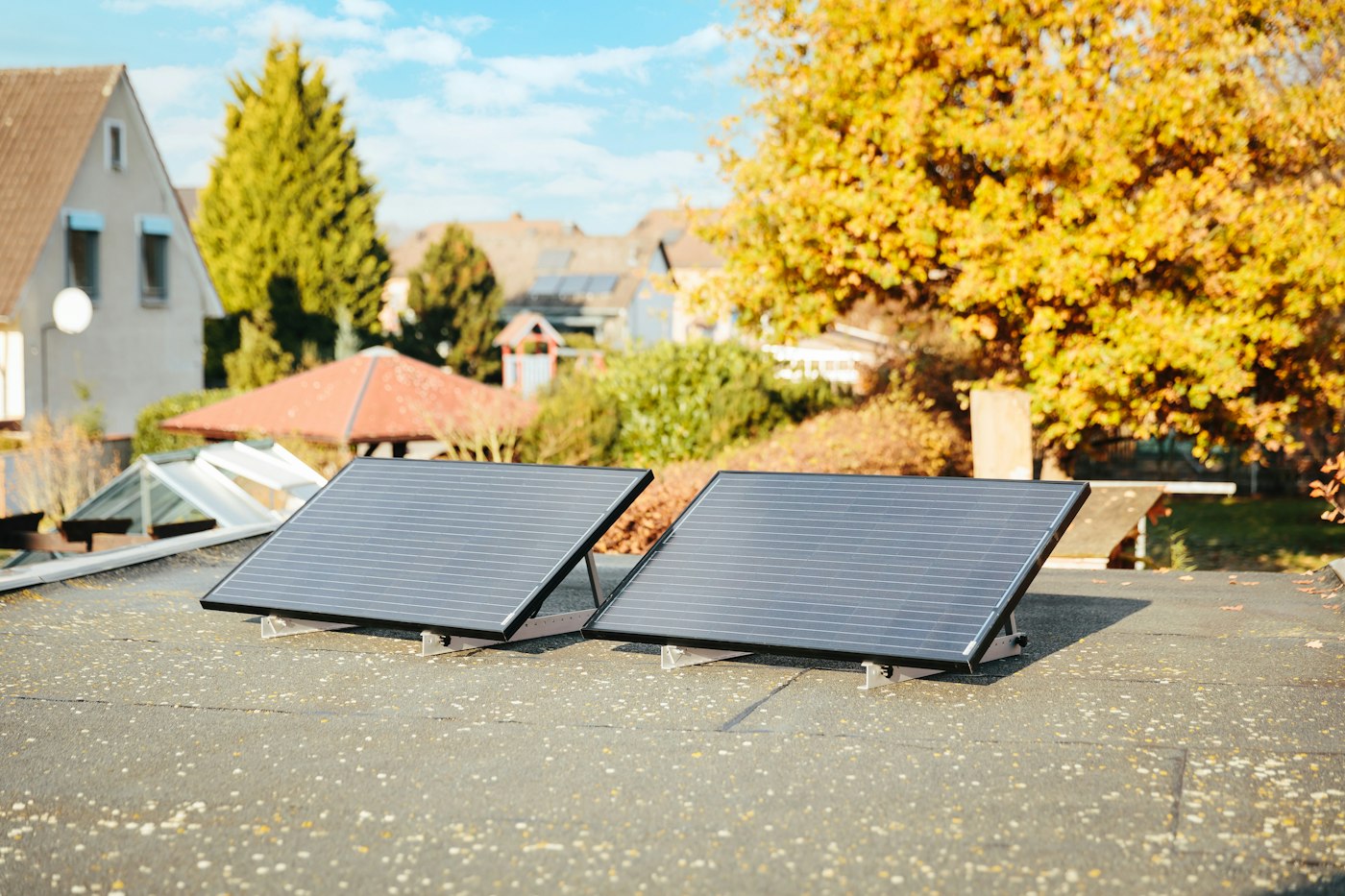
What solar panels really cost in 2026
The average price, what it means for your house, and how long it takes to pay off now that the tax credit is gone.
- U.S. home solar averaged about $3.36 per watt installed in the second quarter of 2026, before any incentives.
- At that price, a typical 8 kW system works out to roughly $27,000 before incentives. Your quote can be well above or below that.
- Without the 30% federal credit, payback takes noticeably longer, so your electric rate and your utility’s rules matter more than ever.
General consumer information, not financial advice. Prices vary widely by state, installer, roof, and equipment. The examples below use national averages and stated assumptions; get written quotes for your own home.
The first question almost everyone asks about solar is the simplest one: how much? It’s also the one most sales pitches answer last, usually after a monthly payment and a savings chart. Here’s the honest starting point, using the latest national numbers, and a simple way to work out what solar might cost and save on your own house.
The national average right now
According to the Wood Mackenzie and Solar Energy Industries Association quarterly market report, residential system prices averaged $3.36 per watt in the second quarter of 2026, down 1.4% from a year earlier. That’s the full installed price, including equipment, labor, permits, and the installer’s overhead, before any incentive is subtracted.
Price per watt is the number to remember, because it lets you compare systems of different sizes. Multiply it by the system size in watts to get a total.
What that means for different system sizes
| System size | Price at $3.36/W, before incentives | Often fits |
|---|---|---|
| 6 kW | About $20,160 | Smaller homes or lower electricity use |
| 8 kW | About $26,880 | Many average-size homes |
| 10 kW | About $33,600 | Larger homes, central air, or an EV |
| 12 kW | About $40,320 | High usage, all-electric homes |
The right size comes from your own 12 months of electricity use and your utility’s crediting rules, not from the size of your house. Our guide to comparing solar quotes explains how installers should size a system.
What pushes a quote above or below the average
- Your roof. Steep pitches, tile or slate, multiple roof sections, and flat roofs that need tilted racking all add labor.
- Equipment. Premium panels, microinverters, or optimizers cost more than a basic panel with a single string inverter.
- Electrical upgrades. An older or smaller electrical panel may need replacing before solar can connect.
- A battery. Adding storage can raise the total substantially. Ask for every quote with and without one.
- Where you live. Labor costs, permit fees, and competition among installers vary widely by state and city.
- How you pay. Loans with dealer fees can make the financed price much higher than the cash price. See our cash vs. loan vs. lease comparison.
How the end of the tax credit changed the math
Until the end of 2025, homeowners who bought a system could claim a 30% federal tax credit. That credit ended for systems placed in service after December 31, 2025, so in 2026 the price you’re quoted for an owned system is, for most people, the price you pay. Some states, utilities, and local programs still offer incentives, and a solar company may pass part of its own business credit through on a lease or PPA. Our explainer on whether solar is still worth it covers what’s left.
A simple payback example
These numbers are illustrative, not a prediction for your home. They show how the pieces fit together. Assume an 8 kW system priced at the national average, producing 10,500 kWh a year, in a home paying 18.2 cents per kWh, EIA’s 2026 national forecast.
| Scenario | Upfront cost | Yearly bill savings | Simple payback |
|---|---|---|---|
| 2026, full retail net metering | $26,880 | About $1,911 | About 14 years |
| 2026, weaker export credits (savings about 40% lower) | $26,880 | About $1,147 | About 23 years |
| Same system in 2025, with the 30% credit | $18,816 after the credit | About $1,911 | About 10 years |
Simple payback ignores rising electricity prices, panel wear over time, maintenance, and financing costs, so treat it as a rough guide. What it shows clearly: your electricity rate and your utility’s net metering rules now decide most of the outcome.
Run your own numbers in 15 minutes:
- Find your price per kWh on your bill, including delivery charges, and your total yearly kWh use.
- Estimate your roof’s yearly production with the free PVWatts calculator from the Energy Department’s National Laboratory of the Rockies (formerly NREL).
- Multiply the production you would use or get credited for by your price per kWh to estimate yearly savings.
- Divide a quote’s total price by those yearly savings for a rough payback.
Is your quote fair? A quick check
Divide the quote’s total cash price by its system size in watts. If an 8 kW quote is $28,000, that’s $3.50 per watt, close to the national average. A price far above the average deserves a clear explanation, such as a complex roof, premium equipment, or a battery. A price far below it deserves a close look at the equipment, the warranties, and what’s left out.
Ways to lower the cost
- Get at least three quotes. Prices for the same home can differ by thousands of dollars.
- Cut waste first. Sealing drafts, a thermostat schedule, and LED lighting reduce how big a system you need.
- Ask for a cash price, even if you plan to finance, and compare it with the financed total.
- Check local incentives with your state energy office, your utility, and the DSIRE database.
- Fix the roof first if it needs replacing soon, to avoid paying to remove and reinstall panels later.
- Consider community solar if rooftop panels don’t pencil out; it usually costs nothing upfront. See how community solar works.
Common questions
Is solar cheaper than it used to be?
Equipment has become much cheaper over the past decade, and the average installed price dipped slightly in the past year. But for homeowners buying a system, losing the 30% credit means the effective price in 2026 is higher than in 2025.
Why do quotes vary so much?
Installers use different equipment, overhead, and profit margins, and they size systems differently. Comparing price per watt, estimated yearly production, and warranties side by side shows which quote is really the better deal.
Do solar panels have ongoing costs?
Usually small ones. Panels have no moving parts, but the inverter may need replacing during the system’s life, and removing panels for a roof repair costs money. Check what the warranties cover.
Is leasing cheaper?
A lease or PPA costs little or nothing upfront, but you usually save less over time and sign a long contract. Read our 9 questions to ask before a solar lease first.
Does my home qualify for solar at all?
Roof direction, shade, roof age, and your electric rate matter most. Start with our checklist of 11 signs your home is a good fit.
Helpful gear
Know your real usage before you get quotes
Shows when and where your home uses power, so you can check whether a quoted system size matches your actual use. Installed in your electrical panel; hire an electrician if you’re not qualified.See energy monitors on Amazon →
A cheap way to find power-hungry appliances. Cutting waste first can shrink the system you need and its price.See usage meters on Amazon →
One of the easiest ways to lower your baseline use before sizing a system.See LED bulbs on Amazon →
As an Amazon Associate we earn from qualifying purchases. Links open Amazon search results for a type of product; we haven’t tested specific models.
Sources: Wood Mackenzie and Solar Energy Industries Association, U.S. Solar Market Insight Q2 2026 (as reported by Mercom); U.S. Energy Information Administration, Short-Term Energy Outlook, October 2026; IRS guidance on the Residential Clean Energy Credit; Database of State Incentives for Renewables & Efficiency (DSIRE). Updated October 2026.
More in our 2026 solar guide
- Is solar still worth it without the tax credit?
- 11 signs your home is a good fit for solar
- 9 numbers to compare on solar quotes
- Cash vs. loan vs. lease vs. PPA
- 9 questions before you lease solar panels
- Net metering, explained
- Is a home battery worth it?
- Community solar for renters and shady roofs
- Selling a house with solar panels
- 12 solar sales red flags