
Victor Sterling, MS, CHDA
Patient Rights Advocate & Medicare Policy Specialist
When an unexpected $6,000 hospital bill arrives after a routine outpatient procedure or emergency room visit, most patients feel paralyzed. You compare the charges against your bank account, wonder if a coding mistake occurred, and feel completely powerless against a multi-billion-dollar health system’s billing department.

Hospitals rely heavily on information asymmetry. They set artificially inflated gross prices—known as the “chargemaster rate”—expecting uninsured or out-of-network patients to simply accept them without question. But you do not have to fight blind. By utilizing FAIR Health Consumer, the nation’s largest independent repository of commercial health insurance claims, you can arm yourself with indisputable market benchmarks to prove your hospital overcharged.
💡 What Is FAIR Health Consumer?
FAIR Health is an independent, non-profit organization that manages a database of over 40 billion private healthcare claim records. Its free public tool at fairhealthconsumer.org calculates exact geographic cost benchmarks based on real paid claims across specific zip codes.
Why Hospital Bills Are Often Inflated
Unlike traditional retail markets, hospital pricing is notoriously arbitrary. A single CT scan might be billed at $800 at a community clinic, while an academic medical center five miles away charges $4,200 for the exact same CPT billing code.
Insurance companies rarely pay these full sticker prices; they negotiate steep institutional discounts (often 60% to 80% off chargemaster rates). However, when you are out-of-network, uninsured, or facing a high deductible before coverage kicks in, hospitals regularly demand the full unadjusted amount. Showing up with regional fair-market average data completely disrupts their bargaining position.
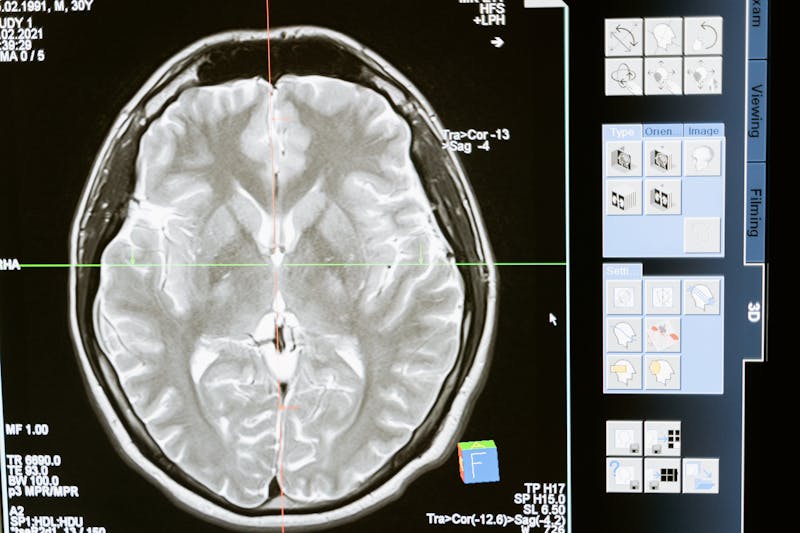
Matching CPT codes from your itemized bill against FAIR Health database benchmarks reveals exact percentage markups.
Step-by-Step: How to Audit Your Bill with FAIR Health
Follow this strategic protocol on your laptop or mobile device to expose overcharges:
Step 1: Obtain a Detailed Itemized Bill
Never attempt to audit a summary statement. Call the hospital billing department and request a comprehensive Itemized Bill featuring CPT / HCPCS procedure codes for every line item. Without 5-digit CPT codes, you cannot query the FAIR Health database accurately.
Step 2: Enter Your Geographic Zip Code
Navigate to fairhealthconsumer.org. Healthcare prices vary drastically by location. Enter the first three digits of the hospital’s zip code (known as a GeoZip) to ensure your benchmark reflects local market realities.
Step 3: Query the CPT Code & Compare Percentiles
Input the specific medical procedure code. The database will return two crucial financial metrics:
- In-Network Allowed Amount: What insurance companies typically pay for this service locally.
- Uninsured / Out-of-Network Usual, Customary, and Reasonable (UCR) Rate: The 50th to 80th percentile benchmark charges in your area.
If your hospital billed $3,500 for a procedure where the FAIR Health 80th percentile UCR rate is $1,100, you have official, data-backed evidence of unreasonable overcharging.
Advocacy Script: Negotiating Overcharges with FAIR Data
Send this written notice via email or certified mail to the hospital’s Patient Financial Services Manager:
“I am writing to formally dispute line item charges on Account #[Number]. Based on independent regional commercial claims data from the FAIR Health Consumer database (GeoZip [Zip Code]), the Usual, Customary, and Reasonable (UCR) 75th percentile charge for CPT [Code] is $[Amount]. Your facility billed $[Billed Amount]—a [Percentage]% markup over prevailing market standards. I am prepared to settle this bill immediately for the fair-market allowed rate of $[Target Amount]. Please update my statement accordingly.”
What to Do If the Hospital Refuses to Negotiate
- Escalate to Patient Financial Advocacy: Request a review by the hospital’s executive billing ombudsman or Chief Financial Officer. Mentioning third-party database audits signals that you are an informed consumer prepared for legal mediation.
- Check Federal No Surprises Act Violations: If the overcharge stems from an out-of-network provider operating at an in-network hospital facility, report the issue immediately to the CMS No Surprises Help Desk.
- File a Complaint with the State Attorney General: Most state AG offices maintain healthcare consumer protection divisions that investigate unfair billing practices and gross price gouging.

The Bottom Line
Healthcare pricing transparency is no longer a luxury—it is your most powerful defense against financial exploitation. By leveraging FAIR Health Consumer data, obtaining CPT-itemized statements, and presenting objective market evidence, you transform an overwhelming medical debt negotiation into a data-driven business resolution.