
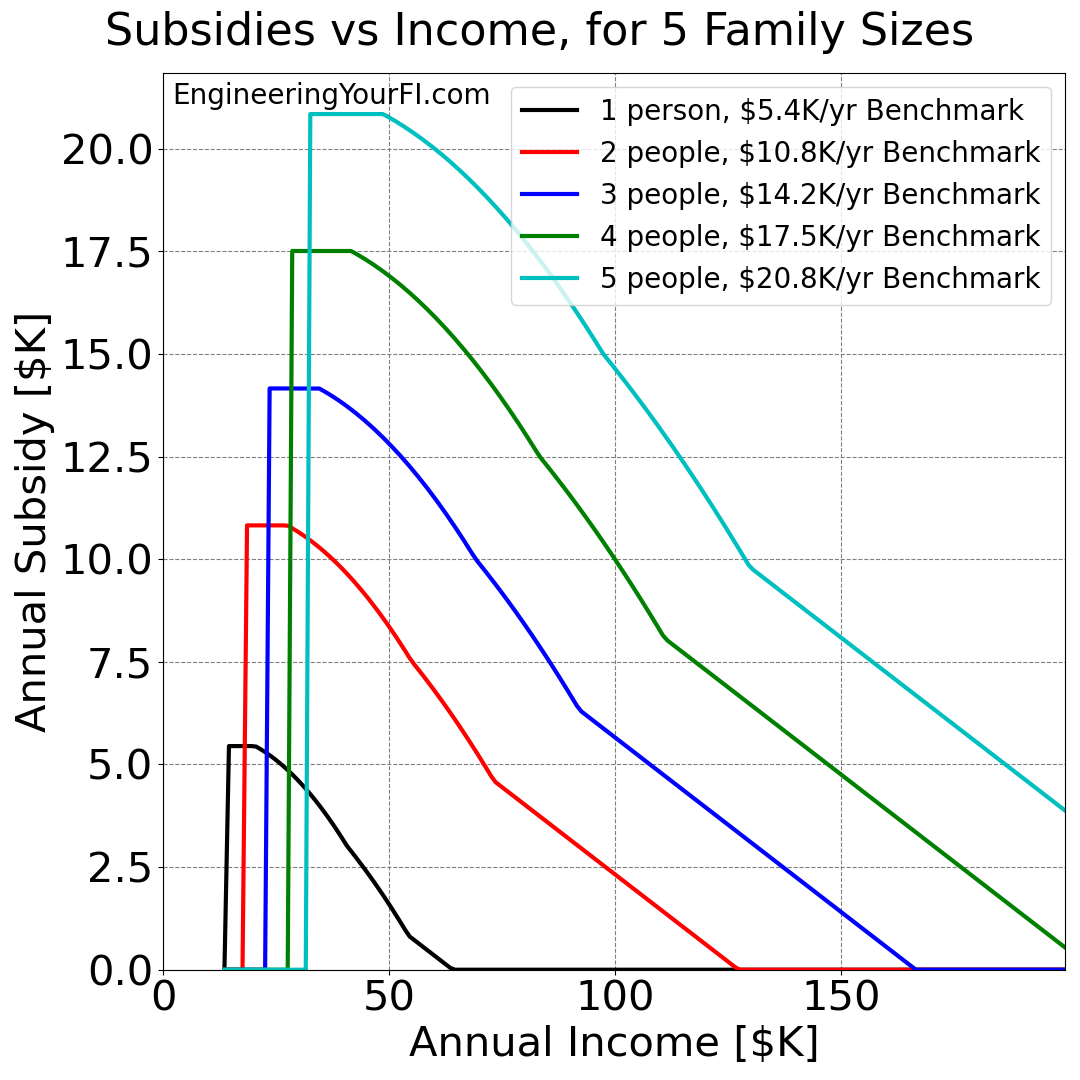
When you shop for a health plan on HealthCare.gov or your state marketplace exchange, the system displays an exact monthly Advance Premium Tax Credit (APTC)—for example, $485 per month. You can apply that $485 toward a Bronze plan, a Gold plan, or any carrier of your choice. But where did that exact dollar figure come from?
Many enrollees assume the government takes an arbitrary percentage off the plan they pick. In reality, your subsidy has nothing to do with the specific plan you end up choosing. Under the statutory architecture of the Affordable Care Act, every dollar of federal assistance is dictated by a single, critical geographic anchor: The Second Lowest Cost Silver Plan (SLCSP).
The SLCSP—often referred to in regulatory filings as the “Benchmark Plan”—is the mathematical pivot point of ACA affordability. If the price of this specific policy rises in your county, your subsidy expands. If its price drops, your subsidy shrinks. Understanding how the SLCSP benchmark functions, how it controls your tax reconciliation on IRS Form 8962, and how to leverage it across different plan tiers is essential to maximizing your healthcare purchasing power.
1. The Mechanical Reality: How the Federal Benchmark Operates
Congress designed the Premium Tax Credit under Internal Revenue Code Section 36B (26 U.S.C. Section 36B) with a clear goal: ensure that an essential, comprehensive health insurance policy remains affordable relative to household income, regardless of local healthcare price inflation.
To establish this objective baseline, the federal government does not evaluate the cheapest plan on the market (which might feature an overly restrictive hospital network) or the most expensive plan. Instead, it isolates all Silver-tier plans available to your demographic profile in your specific rating area, ranks them strictly by gross sticker price, and selects the second lowest premium as the official benchmark.
The calculation sequence follows a strict three-step statutory formula:
- Determine Household Modified Adjusted Gross Income (MAGI): Your income is converted into a percentage of the Federal Poverty Level (FPL) based on household size.
- Calculate Maximum Expected Contribution: A sliding-scale “applicable percentage” of income is set by law and published by the IRS for each tax year; it is lower at lower incomes, and the schedule and income limits have changed over time, so check the current Form 8962 instructions or HealthCare.gov. This is the amount you are expected to contribute toward the benchmark Silver plan.
- Subtract Contribution from the Benchmark: The government takes the actual monthly gross premium of the SLCSP in your zip code and subtracts your maximum expected monthly contribution. The difference is your monthly tax credit.
2. The Benchmark Pricing Matrix in Action
To see how the SLCSP creates dramatic differences in consumer purchasing power across different regions and income levels, consider two individuals with identical annual earnings living in different rating areas. All premiums and the contribution percentage in this table are hypothetical and chosen only to show the arithmetic:
Comparative Analysis: SLCSP Benchmark Calculation Across Geographic Rating Areas
| Calculation Variable | County A (Moderate Cost Area) | County B (High Cost Area) |
|---|---|---|
| Enrollee Profile | Age 40, Single, MAGI = $35,000 (~230% FPL) | Age 40, Single, MAGI = $35,000 (~230% FPL) |
| Gross Premium of Lowest Silver Plan | $430 / month | $680 / month |
| Gross Premium of SLCSP (The Benchmark) | $460 / month | $740 / month |
| Expected Contribution (assumed ~3.2% for illustration) | $93 / month | $93 / month |
| Calculated Federal Subsidy (SLCSP − Contribution) | $367 / month ($4,404 / year) | $647 / month ($7,764 / year) |
| Net Cost If Buying the Lowest Cost Silver | $430 − $367 = $63 / month | $680 − $647 = $33 / month |
Because the subsidy is permanently tied to the Second Lowest Cost Silver Plan, purchasing the Lowest Cost Silver plan or a Bronze plan allows the consumer to pay less than their expected contribution, and in some areas the credit covers the whole premium of a lower-priced plan.
3. The Portability Advantage: Applying the Benchmark Anywhere
A common misconception is that you must enroll in the Benchmark Silver Plan to receive your subsidy. You do not. The federal government calculates your tax credit based on the SLCSP, but grants that dollar amount as a portable voucher:
- The Bronze Tier Arbitrage: If your calculated monthly tax credit is $450, and a comprehensive Bronze plan in your area carries a gross premium of $380, the tax credit covers 100% of the invoice. Your premium drops to $0.00, with the excess subsidy simply forfeited.
- The Gold Tier Upgrade: If a robust Gold plan costs $540, applying your $450 credit means you pay only $90 per month out of pocket. You enjoy low deductibles and rich coverage while the federal government absorbs the vast majority of the bill.
4. The Tax Audit Connection: Why the SLCSP Appears on Form 1095-A
In January, every marketplace enrollee receives IRS Form 1095-A (Health Insurance Marketplace Statement). Column B of Part III specifically reports the monthly “Applicable SLCSP premium” that applied to your coverage.
When you file your annual tax return, this figure is entered directly into IRS Form 8962 (Part II). If you moved between zip codes, had a child, or experienced household changes mid-year without notifying the exchange, the SLCSP figure in Column B may be incorrect. An inaccurate SLCSP benchmark will distort your allowable Premium Tax Credit, potentially generating an erroneous tax bill or reducing your rightful refund. If Column B is blank or looks wrong, HealthCare.gov has a tax tool for looking up the correct benchmark premium for each month, and you can ask the marketplace for a corrected form. For what happens when income was estimated too low, see underestimating income and Form 8962.
5. A Worked Example (Hypothetical)
The figures below are invented to show the method. Your own benchmark premium and contribution percentage will differ, and the percentage schedule changes from year to year.
- Household: a single 40-year-old expects $35,000 of income for the year.
- Assumed contribution: suppose the applicable percentage for that income is 3.2%. $35,000 × 3.2% = $1,120 a year, or about $93 a month.
- Benchmark: the second lowest cost Silver plan for this person costs $460 a month.
- Credit: $460 − $93 = $367 a month.
- Using the credit on a $380 Bronze plan: $380 − $367 = $13 a month.
- Using it on a $540 Gold plan: $540 − $367 = $173 a month.
- If income ends up higher: the expected contribution rises, the credit the person was entitled to shrinks, and some of the advance payments may have to be repaid at tax time.
The credit is the same whichever plan is chosen. What changes is how much of the premium is left for you to pay, and what the plan covers when you use care.
6. Why the Benchmark Can Change From Year to Year
The benchmark is not a fixed plan. It is recalculated every year, and it can change even if you do nothing:
- A new insurer enters with a lower-priced Silver plan. The benchmark premium can fall, and your credit falls with it. If you keep the same plan, your net premium can go up even though the plan’s own price barely moved.
- An insurer leaves or raises prices. The benchmark can rise, which increases the credit.
- You move. Premiums are set by rating area, so a new address can mean a different benchmark.
- Your household changes. The benchmark is based on the people in your tax household who are enrolling, and on their ages.
This is the main reason to compare plans during every open enrollment instead of letting coverage renew automatically.
7. Checklist: Using the Benchmark When You Shop
- Estimate your household’s modified adjusted gross income for the coverage year as carefully as you can.
- Enter it at HealthCare.gov or your state exchange to see your estimated credit.
- Compare what is left to pay on Bronze, Silver and Gold plans after the same credit is applied.
- If your income is in the range for cost-sharing reductions, look closely at Silver plans, because those extra savings are available only on Silver. See how cost-sharing reductions work.
- Check that your doctors and prescriptions are covered before choosing on price alone.
- Report income, address and household changes to the marketplace during the year.
- Keep Form 1095-A with your tax records and check Columns A, B and C before you file.
8. Common Mistakes
- Thinking you must buy the benchmark plan. The credit can be used on any metal-level plan sold through the marketplace. It generally cannot be used on catastrophic plans or on plans bought outside the marketplace.
- Choosing on premium alone. A lower premium usually comes with a higher deductible. Add up the premium and the care you expect to use.
- Letting the plan auto-renew. A changed benchmark can change your net premium noticeably.
- Not updating income. Advance credits are based on an estimate. If your income changes and you do not report it, the difference is settled on your tax return. Our guide to income thresholds and subsidies explains the ranges to watch.
- Skipping Form 8962. If advance credits were paid for you, you generally must file a return and reconcile them, even if you would not otherwise need to file.
The Bottom Line
The Second Lowest Cost Silver Plan is the unseen financial engine powering the entire Affordable Care Act marketplace. It establishes local market affordability and dictates every dollar of premium assistance you receive. By understanding how the SLCSP benchmark is calculated, tracking its values on Form 1095-A, and applying your resulting subsidy strategically across different metal tiers, you take full control of your healthcare costs and avoid costly administrative surprises.
Frequently Asked Questions
Do I have to enroll in the second lowest cost Silver plan to get a subsidy?
No. The benchmark is used only to calculate the amount of the credit. You can apply the credit to other marketplace plans in the Bronze, Silver, Gold or Platinum levels.
Where do I find my SLCSP premium?
It is shown in Part III, Column B of Form 1095-A, which the marketplace sends after the end of the year. If it is missing or incorrect, use the tax tool on HealthCare.gov or your state exchange, or contact the marketplace.
Why did my subsidy go down when my income did not change?
The benchmark premium in your area may have fallen, or the contribution percentages for the year may have changed. Either one reduces the credit even when your income is the same.
What happens if the credit is larger than the premium of the plan I pick?
The credit cannot exceed the premium for the plan’s essential health benefits. Your premium may drop to $0 or close to it, and the unused part is not paid to you.
Does the benchmark include my whole family?
It is based on the members of your tax household who are enrolling in marketplace coverage and are not eligible for other qualifying coverage. Families whose members are in different plans or locations have special rules, so ask the marketplace or a tax professional.