
The utility rule that decides whether solar pays off
Net metering in plain English, and the exact questions to ask your power company.
- Net metering is how your utility credits you for solar power you send back to the grid.
- Some utilities credit close to the full retail rate; others pay much less.
- With the homeowner tax credit gone, these rules now have a bigger effect on your savings.
General consumer information. Net metering rules are set by state regulators and individual utilities and change over time. Confirm the current rules with your utility before you sign a solar contract.
Solar panels make the most power in the middle of the day, which is often when nobody’s home using it. That extra power flows back out to the grid. What your utility gives you for it is one of the biggest factors in whether solar saves you money, and it’s the part salespeople often skip over.
How net metering works
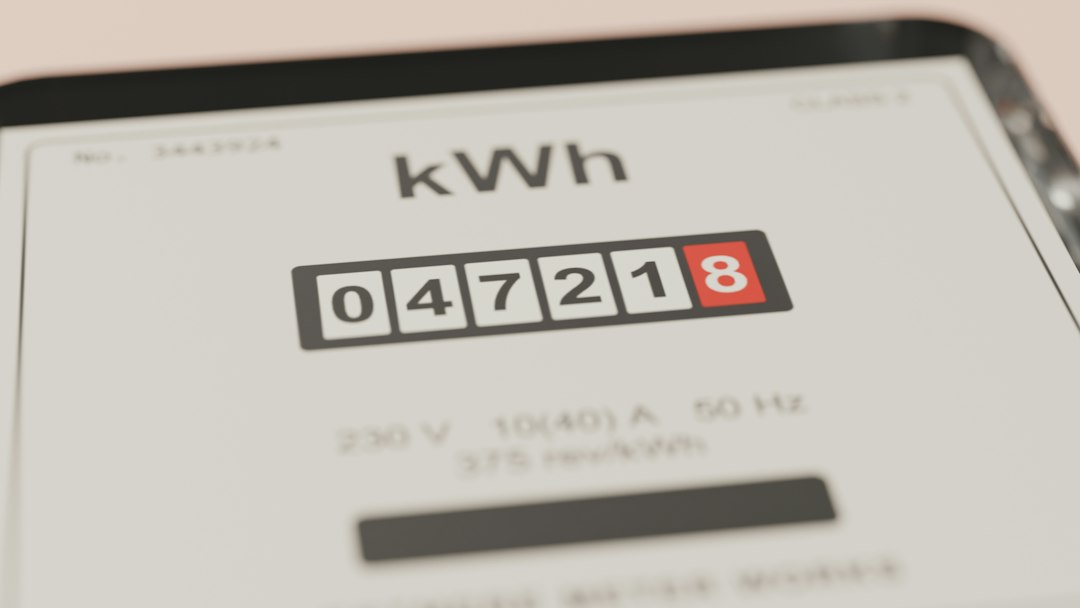
With solar, your meter tracks electricity in both directions: what you pull from the grid and what your panels push back to it. Under traditional net metering, the two are netted against each other. If you send 300 kilowatt-hours to the grid in a month and use 500 from it, you’re billed for 200.
Many utilities let excess credits roll over from month to month, so a sunny summer can offset a darker winter. At the end of a 12-month period, often called the true-up, leftover credits may be paid out at a lower rate, carried forward, or simply expire, depending on your utility.
The three versions you’ll run into
| Type | What you’re credited for exported power | Effect on solar savings |
|---|---|---|
| Full retail net metering | About the same price you pay for grid power | Strongest. Each kWh you export is worth roughly as much as one you use. |
| Net billing | A lower export rate, often tied to the utility’s costs or the time of day | Weaker. Using your own solar power at home matters more, which can make a battery more attractive. |
| Avoided-cost or wholesale credit | Roughly what the utility would pay a power plant | Weakest. Systems are usually sized smaller to match daytime use. |
California is the best-known example of a change: in 2023 it moved new solar customers of its major utilities from traditional net metering to a net billing tariff that credits exports at much lower rates. Other states have made or are debating similar changes.
Why it matters more in 2026
Until the end of 2025, the 30% federal tax credit cushioned the math for homeowners buying solar. With that credit gone, savings come almost entirely from the power your panels offset, and net metering rules decide how much each kilowatt-hour is worth. Two neighbors with identical roofs can see very different payback times if they’re served by different utilities. Our guide to whether solar is still worth it covers the rest of the equation.
Other charges that can eat into savings
- Fixed monthly charges. Many utilities charge a flat customer fee no matter how little power you buy. Solar can’t reduce it.
- Minimum bills. Some set a monthly minimum even if your credits cover all your usage.
- Time-of-use rates. If power costs more in the late afternoon and evening, when solar output drops, your savings depend on when you use electricity.
- Interconnection and application fees. One-time fees to connect your system to the grid.
Questions to ask your utility before you get solar quotes:
- How are exported kilowatt-hours credited for new solar customers right now?
- Do credits roll over month to month? What happens at the annual true-up?
- What fixed or minimum monthly charges will I still pay?
- Will I be moved to a time-of-use rate? What are the peak hours?
- If the rules change later, are existing solar customers grandfathered, and for how long?
- What are the interconnection steps, fees, and typical wait time?
What weaker net metering means for your plans
If your utility credits exports at a low rate, solar can still work, but the strategy changes. A smaller system sized to your daytime use may pay back faster than a big one. Shifting laundry, dishwashing, and EV charging to sunny hours helps. And a battery that stores midday power for the evening becomes more valuable; see whether a home battery is worth it.
If you rent or can’t put panels on your roof, community solar uses a similar bill-credit system without any equipment at your home.
Helpful gear
Shift more of your usage to sunny hours
Run a dehumidifier, pool pump timer, or chargers in the middle of the day, when solar output is highest and export credits matter less.See smart plugs on Amazon →
Shows when your home uses the most power, so you can see how much solar you would actually use versus export. Install by a qualified electrician.See home energy monitors on Amazon →
As an Amazon Associate we earn from qualifying purchases. Links open Amazon search results for a type of product; we haven’t tested specific models.
Common questions
Will my utility send me a check for extra power?
Usually not monthly. Most utilities apply credits to your bill. Some pay out leftover credits once a year at the true-up, often at a reduced rate. Others let them expire.
Can the rules change after I install solar?
Yes, rules can change for future customers, and sometimes for existing ones. Many states have grandfathered existing solar customers for a set number of years, but that isn’t guaranteed. Ask your utility what protections apply.
Where can I look up the rules for my state?
Your utility’s website and your state public utility commission are the authoritative sources. The Database of State Incentives for Renewables & Efficiency (DSIRE) also summarizes net metering policies by state.
Does net metering affect how big a system I should buy?
Yes. With full retail credit, sizing a system to cover most of your annual use often makes sense. With lower export credits, a smaller system that matches your daytime use is usually better value. Check how each quote was sized using our guide to comparing solar quotes.
Sources: U.S. Department of Energy; state public utility commissions; California Public Utilities Commission; Database of State Incentives for Renewables & Efficiency (DSIRE). Updated October 2026.