

Picture this scenario: You are walking out of your local grocery store, and you see a neatly organized tent set up in the parking lot offering “Free Cardiovascular Risk Screenings.” Or perhaps you receive a friendly, personalized text message offering a complimentary DNA cheek swab to check for cancer markers. At first glance, these offers look like excellent opportunities to take proactive control of your health—without spending a dime.
Community health initiatives, public wellness fairs, and government-sponsored preventative care programs absolutely exist. They perform a vital service by increasing healthcare accessibility. However, not every “free” health screening is a benevolent public service. In recent years, federal consumer protection agencies have reported a massive surge in deceptive healthcare promotions. These operations use the allure of complimentary medical testing to harvest highly sensitive personal data, generate deceptive insurance leads, or commit outright medical billing fraud.
The goal is not to become completely cynical and avoid all free health services. Rather, as a smart healthcare consumer, you need to understand the underlying economy of these offers. Why would a company you have never heard of spend money to provide you with a free medical test? What are they really getting in return? In this guide, we will explore the hidden mechanisms behind questionable healthcare promotions, teach you how to distinguish a legitimate community health service from a predatory marketing operation, and show you exactly how to protect your privacy.
Why “Free” Deserves a Closer Look
In the digital age, there is a well-known saying regarding internet services: “If you are not paying for the product, you are the product.” This logic applies heavily to the modern healthcare marketing landscape. When an entity offers a complimentary wellness check, health survey, or medical screening, it costs them money. They have to pay for the testing equipment, the staff, the location rental, and the advertising. If they are not charging you a fee, that revenue must be generated elsewhere.
Legitimate organizations offset these costs through grants, public health funding, or hospital community outreach budgets. Predatory operations, on the other hand, offset these costs by monetizing you. They do this in three primary ways:
- Data Brokering: Your health status, age, contact information, and medical anxieties are incredibly valuable. Marketers compile this data to sell to life insurance agents, pharmaceutical marketers, and purveyors of unregulated health supplements.
- Insurance Lead Generation: A “free screening” might just be a pretext to get you to sit down with an unlicensed broker who will use high-pressure tactics to convince you to switch your Medicare Advantage plan or purchase a junk health insurance policy.
- Fraudulent Billing: Some organizations will perform a basic, low-cost screening but ask for your Medicare or private insurance information under the guise of “record keeping.” They then illegally bill your insurance thousands of dollars for complex diagnostic services you never actually received.
The Data Goldmine: What Information Are They Actually Asking For?
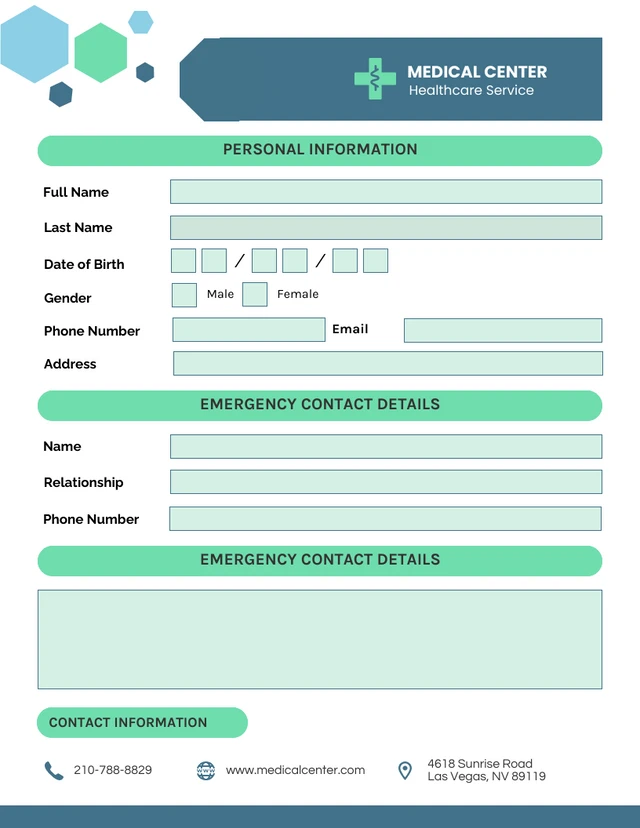
Scammers often use official-looking intake forms to harvest sensitive personal details.
To understand the risk, you must look closely at the intake forms or the questions asked during a promotional health survey. A legitimate, free blood pressure check at a local pharmacy typically requires nothing more than you rolling up your sleeve. At most, they might ask for a first name and your age for statistical tracking.
Suspicious operations will push for a much deeper level of detail. They rely on the fact that patients are conditioned to fill out extensive paperwork in medical settings without questioning it. You should be immediately skeptical if a “free” service asks for:
- Your Social Security Number: There is almost no legitimate reason a community screening needs this.
- Your Medicare Number: Your Medicare card is essentially a credit card for healthcare services. Scammers want this number to bill the government for fraudulent services.
- Banking Information: Some scams claim they need a credit card on file for “incidental fees” or to “verify your identity.” Never provide financial details for a strictly complimentary service.
- Detailed Family Medical History: While relevant in a true clinical setting, pop-up tents use this to profile you for targeted advertising of expensive, often unregulated medical devices or supplements.
Your health data is highly sensitive. Just as you should regularly perform a digital security reset to protect your online passwords and internet privacy settings, you must be equally vigilant about whom you hand your physical medical history to. Once your data enters the unregulated broker market, it is nearly impossible to pull it back.
7 Warning Signs of Questionable Healthcare Promotions
According to the Federal Trade Commission (FTC) and the U.S. Department of Health and Human Services (HHS), healthcare scams tend to share several common red flags. If you encounter any of the following warning signs, proceed with extreme caution.
1. The Unsolicited Approach
Legitimate medical providers do not cold-call you, text you out of the blue, or knock on your door to offer medical tests. If the communication was initiated by a stranger urging you to take a “free” test you never requested, it is highly likely to be a scam.
2. The “We Need Your Insurance” Catch
If an offer is advertised prominently as “100% Free,” but the representatives insist they must have your insurance card, Medicare number, or Medicaid details to “process the paperwork,” it is not free. They are planning to bill your insurance.
3. Aggressive High-Pressure Tactics
Healthcare decisions should be made thoughtfully. If a representative tells you the offer expires in 10 minutes, uses fear tactics about your health risks, or pushes you to sign digital documents on a tablet without giving you time to read them, walk away immediately.
4. Vague or Misleading Company Names
Scammers often use names that sound like official government agencies (e.g., “National Medicare Wellness Center”) to build false trust. Always ask for the exact corporate name and verify their credentials independently.
5. Unconventional Locations Without Clinical Ties
While legitimate health fairs happen in community centers, be wary of highly complex diagnostic tests (like genetic sequencing or full-body scans) being offered out of RVs, motel lobbies, or abandoned storefronts with no clear affiliation to a local hospital.
6. Bribes and Incentives
Federal law strictly prohibits offering beneficiaries cash, gift cards, or expensive meals in exchange for agreeing to receive medical services billed to Medicare. If you are being offered a $50 gift card just to take a cheek swab, it is likely an illegal kickback scheme.
7. Refusal to Provide Written Documentation
A legitimate provider will gladly hand you a brochure, a clearly written privacy policy, and their contact information. If a representative relies solely on a verbal pitch and refuses to give you anything to take home and review, they are hiding something.
The Difference Between a Legitimate Preventive Service and a Marketing Offer
Under the Affordable Care Act (ACA), most health insurance plans are required to cover a specific set of preventive services—like cholesterol screenings, mammograms, and certain vaccines—at no cost to you, even if you haven’t met your yearly deductible. However, these legitimate “free” services are typically conducted by your established primary care physician (PCP) or an in-network lab, not by a telemarketer.
| Feature | Legitimate Community Service | Predatory Marketing Offer |
|---|---|---|
| Sponsorship | Clearly sponsored by a local hospital, state health department, or recognized non-profit. | Sponsored by a vague LLC, a telemarketing firm, or an out-of-state laboratory. |
| Data Requested | Basic demographics (age, zip code) for statistical reporting. | Demands Social Security, Medicare numbers, or detailed financial data. |
| Follow-Up Process | Advises you to take your screening results directly to your own primary care doctor. | Connects you immediately to an “insurance specialist” or attempts to sell a secondary product. |
| Tone | Educational, patient, and completely voluntary. | Urgent, pressuring, and focuses heavily on the financial value of the “freebie.” |
Recognizing the Traps: Realistic Hypothetical Scenarios
To help illustrate how these operations work in the real world, consider these hypothetical examples based on documented federal warnings.
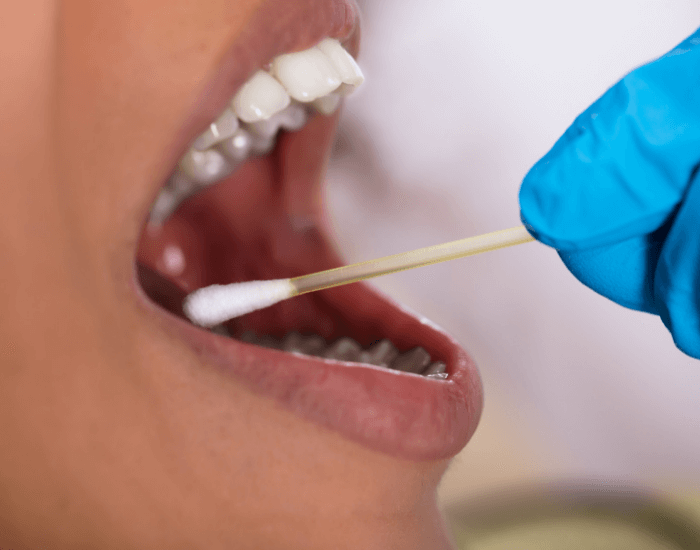
Genetic testing scams often involve quick, seemingly harmless cheek swabs.
Hypothetical Example 1: The “Free” DNA Cancer Screening
The Pitch: A friendly recruiter sets up a table in the lobby of a senior living community. They offer “free” genetic cheek swabs that they claim will identify a person’s risk for hereditary cancers or cardiovascular diseases, claiming the program is fully covered by Medicare.
The Catch: According to warnings from the HHS Office of Inspector General (OIG), this is a prevalent fraud scheme. The scammers take the victim’s Medicare number and swab their cheek. A compromised doctor, who has never met the patient, signs an order for the test. The scammers then bill Medicare thousands of dollars for an unnecessary test. The victim rarely receives accurate or actionable medical results, and their Medicare number is now compromised.
Hypothetical Example 2: The “Clinical Trial” Data Harvest
The Pitch: You see a social media ad offering $500 to participate in a “free clinical trial for chronic joint pain.” You click the link, which asks you to fill out an exhaustive health survey including your address, date of birth, and health insurance information to see if you qualify.
The Catch: There is no clinical trial. The website exists solely to capture your data. Within 48 hours, you begin receiving endless robocalls trying to sell you unproven arthritis supplements and junk health insurance. Legitimate trials do not operate this way. If you are legitimately trying to access experimental treatments, there are proper channels to do so, such as learning how to use clinical trials data to win coverage through your actual doctor, not through a random internet form.
The Verification Process: Questions to Ask Before Sharing Information
Before you allow anyone to swab your cheek, draw your blood, or input your data into an iPad at a health fair, put them on the defensive. Ask these critical questions:
- “Who is paying for this?” If they say it’s free, ask who is funding the operation. If they say “the government” or “Medicare” but won’t provide a specific agency name, walk away.
- “Are you going to bill my insurance?” If an offer is truly free, they do not need your insurance card. If they say they need it “just for their records,” refuse to provide it.
- “Can I take this form home and review it with my primary care physician?” Scammers rely on urgency. If they tell you the offer is only valid right this second, it is a manipulation tactic.
- “What is your exact privacy policy regarding my data?” Ask if your information will be shared with third parties or marketing affiliates. If they cannot produce a printed, legal privacy policy, do not give them your details.
“If you aren’t paying for the healthcare service, there is a very high probability that your medical data—or your insurance policy—is the actual product.”
Damage Control: What to Do If You Already Submitted Information

Always consult your primary care doctor before agreeing to outside medical testing.
If you realize you have already handed over your Medicare number or personal information to a questionable entity, do not panic, but act quickly. Scammers may use your harvested data to attempt fraudulent insurance billing. If they submit claims to multiple insurers, you could end up trapped in a bureaucratic nightmare trying to sort out who is responsible for what. Navigating these coordination of benefits stalemates can take months to resolve and impact your ability to get legitimate care.
Take these immediate steps:
- Monitor Your EOBs: Read your Explanation of Benefits (EOB) statements from your insurer or Medicare Summary Notices (MSN) meticulously. Look for dates of service, tests, or equipment you do not recognize.
- Report Fraud Quickly: If you spot fake charges, call your insurance provider immediately. If you have Medicare, report it to the HHS OIG Hotline at 1-800-HHS-TIPS.
- File an Official Complaint: If you discover that a fraudulent company has used your information to enroll you in a junk health plan or a fake medical discount card without your consent, you have the right to take action. You can learn how to file an official complaint with your state insurance commissioner to report the fraud and demand an investigation.
- Beware of Identity Theft: If you provided your Social Security number, place a fraud alert on your credit files with the three major credit bureaus (Equifax, Experian, and TransUnion).
Recognizing Suspicious Follow-Up Activity

After submitting information to a deceptive offer, expect a significant increase in spam and scam phone calls.
Sometimes, the initial screening is just the bait. The real trap springs in the weeks following the event. Once you are on a “lead list,” you may experience:
- Aggressive Telemarketing: You may receive relentless calls from “advisors” claiming they need to discuss your “troubling test results,” but the conversation quickly pivots to selling you a new Medicare plan.
- Unexpected Packages: Fraudsters who have your Medicare number might begin mailing you unnecessary medical equipment (like knee braces or back supports) that you never ordered, billing the government for the cost.
- Phishing Texts and Emails: You might receive messages claiming your “health account requires verification.” Never click links in unsolicited texts.
Remember, if you suddenly experience a severe, real medical issue, you should never rely on a “free” pop-up clinic or an online survey. Go to a licensed urgent care or emergency room. Under federal law, you are protected by the prudent layperson standard, meaning your insurance must cover emergency care based on your symptoms, not the final diagnosis. Relying on legitimate medical channels is always the safest choice.
The “Check Before You Test” Practical Checklist
Save this checklist. The next time you are offered a complimentary healthcare screening, medical discount card, or wellness check, ensure you can check off every box before proceeding:
- ☑ I have verified the exact name of the company and researched them online for scam warnings.
- ☑ I am NOT providing my Medicare, Medicaid, or private health insurance number.
- ☑ I am NOT providing my Social Security number or banking information.
- ☑ I have been provided a written privacy policy explaining how my personal health information will be used.
- ☑ I have discussed this screening with my primary care physician, and they agree it is a good idea.
Frequently Asked Questions
Are all community health fairs scams?
Absolutely not. Many local hospitals, municipal health departments, and non-profits host legitimate, valuable health fairs providing basic screenings like blood pressure, cholesterol, and diabetes checks. The difference is that legitimate organizations won’t ask for your Medicare number to bill for these basic public services, and they won’t use high-pressure sales tactics.
Can a free screening hurt me if I don’t give them my insurance info?
Even if you don’t give insurance details, giving away your name, phone number, and medical conditions can put you on targeted marketing lists. You may be bombarded with robocalls or deceptive mailers. Furthermore, relying on a test from an unverified source might give you false peace of mind or cause unnecessary anxiety due to inaccurate results.
Is it legal for companies to offer “Medical Discount Cards” for free?
While medical discount plans are legal, they are not health insurance. Many deceptive promotions offer a “free” discount card to collect your data, only to hit you with hidden monthly membership fees later. The FTC strongly advises consumers to thoroughly vet any medical discount plan before providing any personal information, and you should use HealthCare.gov to search for comprehensive, ACA-compliant insurance instead.
The Bottom Line
Proactive healthcare is vital, and taking advantage of community resources is a smart way to stay on top of your well-being. However, your medical data, your insurance numbers, and your privacy hold immense financial value. Treat any unsolicited offer of a “free” health screening, genetic test, or medical survey with the same skepticism you would treat a cold call asking for your credit card. When in doubt, consult your primary care doctor. They are your best advocate in navigating legitimate healthcare services versus deceptive marketing traps.