


When an unexpected five-figure hospital invoice lands in your mailbox, most patients assume the numbers reflect an accurate tally of the care they received. In reality, hospital bills can contain errors, and patient advocates say mistakes are common enough that every large bill deserves a second look. Among the most costly discrepancies are phantom charges—line items for surgical trays, respiratory treatments, nursing monitoring kits, or diagnostic scans that were ordered in software but never actually touched your body.
Hospitals rely on automated electronic health record (EHR) workflows and Charge Description Masters (CDM) that trigger billing codes the second an order is queued. If an attending physician orders a nebulizer treatment or an abdominal CT scan that is later canceled because your condition stabilized, hospital billing computers frequently fail to reverse the charge. To eliminate these unauthorized entries, you do not need to hire an expensive medical claims consultant. By requesting the complete clinical chart and matching physician orders against nursing flowsheets, you can conduct your own forensic hospital audit.
1. The Legal Right to Your Complete Medical Record
Hospitals often attempt to deflect billing disputes by sending patients a high-level summary statement. A summary statement is not a verifiable legal audit tool. Under the federal Health Insurance Portability and Accountability Act (HIPAA, 45 CFR § 164.524), you hold an enforceable statutory right to inspect and obtain a complete copy of all protected health information maintained in your designated record set.
Furthermore, under federal 21st Century Cures Act information-blocking rules, health systems cannot stall or impose exorbitant processing fees when delivering electronic records. When submitting your formal request to the Health Information Management (HIM) department, explicitly demand the following specific sub-files:
- The Itemized UB-04 Ledger: The comprehensive institutional bill displaying 3-digit Revenue Codes alongside HCPCS/CPT codes.
- Physician Order Records: The timestamped logs detailing every prescription, test, and procedural request entered by attending clinicians.
- Medication Administration Records (MAR): The minute-by-minute electronic log showing exactly which drugs were scanned and administered by bedside nurses.
- Nursing Flowsheets and Progress Notes: The continuous shift documentation tracking physical vital checks, wound dressings, and catheter insertions.
2. Anatomy of Phantom Billing: The Three Most Common Scenarios
Phantom procedures rarely stem from malicious doctors; they stem from fragmented hospital revenue cycle automation. Watch for these three primary systemic failures:
| Phantom Category | How the Error Occurs | Forensic Audit Proof Required |
|---|---|---|
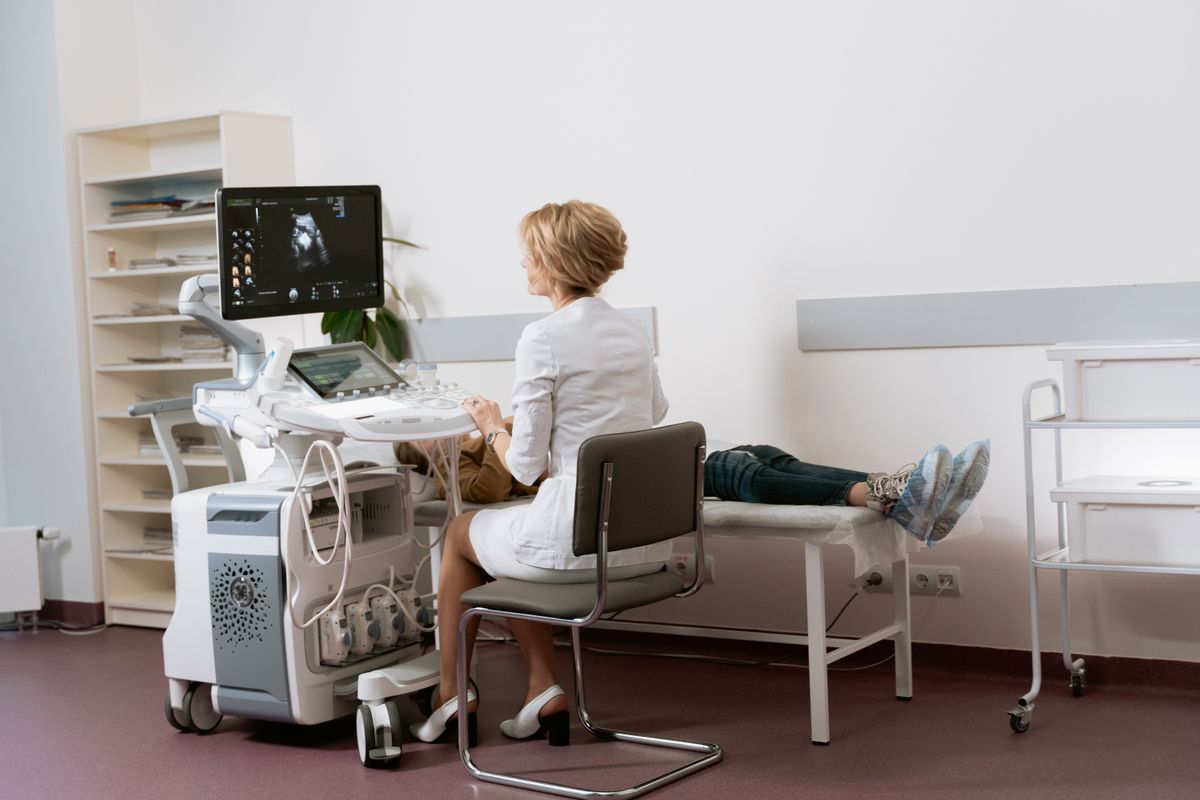
| Ordered But Canceled Diagnostic Tests | Doctor orders an MRI or ultrasound; patient is discharged before the technician arrives. | Cross-examine Radiology Information System (RIS) logs for missing radiologist interpretation signatures. |
| Unopened Surgical Kits & Trays | Central Sterile Supply delivers a specialized instrument pack to the OR that remains unopened. | Review the circulating nurse’s intraoperative count sheet; unused packs must be credited back. |
| Routine Nursing Care Unbundled as Supplies | Basic thermometers, pulse oximeter probes, or bedpans billed under Revenue Code 0270 (General Supplies). | Medicare guidance generally treats routine items as part of the room charge; ask the billing office why they were billed separately. |
3. Step-by-Step Chart Audit Methodology
Follow this systematic three-step protocol to cross-reference your records:
Step 1: Reconcile Pharmacy Invoices Against the MAR
Place your itemized billing statement side-by-side with the electronic Medication Administration Record (MAR). Every IV bag, anti-nausea injection, or pain tablet billed must have a matching barcode-scan entry with an exact date, time, and nurse initials. If the hospital bill charges for four doses of IV Ondansetron (Zofran) but the MAR only shows two timestamps, you have direct empirical proof of over-billing.
Step 2: Cross-Check Diagnostic Scans with Signed Reports
Every imaging scan—whether an X-ray, CT, or Echocardiogram—requires a signed narrative interpretation from a licensed radiologist or cardiologist. Check your clinical file for the actual diagnostic report. If your bill lists CPT code 71045 (Chest X-ray) but no formal radiologist interpretation exists in the medical record, the test may never have been performed, and you have solid grounds to ask the billing office to document it or remove the fee.
Step 3: Audit Central Supply and Kit Markups
Look for ambiguous descriptions such as “Surgical Supply Kit,” “Trauma Supply Level II,” or “Miscellaneous Medical Supplies.” Medicare’s cost-reporting guidance generally treats routine patient room supplies (such as hospital gowns, basic blankets, tape, and standard gloves) as part of the room charge rather than separately billable items, and many commercial payer contracts follow a similar approach, although the rules vary by payer. Demand an itemized breakdown of any line item categorized under Revenue Code 0270 or 0272.
4. The Word-for-Word Chart Discrepancy Dispute Letter
Once you identify phantom line items, send this formal audit demand via certified mail to the hospital’s Director of Patient Financial Services and copy the Compliance Officer:
“To the Patient Financial Services Compliance Department:
I am writing to formally dispute line-item charges on Account #[Account Number] totaling $[Disputed Total] from my admission on [Dates of Care]. A forensic reconciliation of my certified medical record and itemized billing ledger revealed the following unsubstantiated entries:
1. CPT [Insert Code]: Charged at $[Amount]. The Medication Administration Record (MAR) lacks electronic administration confirmation for this dose.
2. Revenue Code 0270 (Supplies): Charged at $[Amount]. These items appear to be routine room supplies that are generally included in the room charge. Please explain why they were billed separately.
I understand that charges should be supported by documentation in the medical record. Please either remove these specific entries and send a corrected statement, or provide the clinical records that document each item was delivered. I would appreciate a written response within 30 days, and I ask that the account be kept out of collections while this dispute is reviewed.”
5. What to Do If the Hospital Stalls Your Audit
If hospital representatives dismiss your findings, escalate the matter outside internal customer service channels:
- File a Grievance with Hospital Risk Management: Notify the facility risk manager that your medical record contains discrepancies between physician orders and billing ledgers. Many facilities take documented chart mismatches seriously and will route them for internal review.
- Notify Your Health Plan’s Special Investigations Unit (SIU): Insurers maintain dedicated fraud and abuse units. Sending your documentation to your insurer’s SIU may prompt the plan to review the claim, and it has its own incentive to avoid paying for services that were not delivered.
- Submit a Complaint to State Licensing Boards: If the hospital will not respond, your state health department or attorney general’s consumer protection office may accept complaints about billing practices. Processes and outcomes vary by state.
6. A Worked Example (Hypothetical)
The following example is hypothetical and uses made-up numbers purely to show how the comparison works.
Imagine a patient who spends two nights in the hospital for dehydration and receives an itemized bill listing, among other things, six doses of an IV anti-nausea drug at $90 each, one abdominal CT scan at $2,400, and a “supply kit” at $310. The patient requests the chart and compares it line by line:
- Medication: The MAR shows four administered doses, not six. Two doses at $90 each means $180 is unsupported.
- Imaging: The physician order for the CT appears in the chart, followed by a note canceling it the next morning. There is no radiology report. The $2,400 charge is unsupported.
- Supplies: The nursing notes do not mention any procedure that would need a kit. The patient asks for an itemized list of what the $310 kit contained.
In this hypothetical, the patient can point to $2,580 in charges ($180 + $2,400) that the chart does not support, plus one $310 item that needs an explanation. That is a far stronger position than a general complaint that the bill “seems too high.”
7. Questions to Ask the Billing Office
When you call or write, specific questions tend to get more useful answers than broad objections. Consider asking:
- Can you show me where in the medical record this service, drug or supply is documented as delivered?
- Was this order canceled or changed, and if so, was the charge reversed?
- What exactly is included in this kit, tray or “miscellaneous supplies” line?
- Has a corrected claim been sent to my insurance company, and will I receive a new statement?
- Will you place the account on hold so it is not sent to collections while the review is open?
Write down the date, the name of the person you spoke with and any reference number. Our guide on how to document every customer service call explains a simple way to keep that log.
8. Common Mistakes to Avoid
- Paying before you compare. It is usually harder to get money back than to have a charge corrected first. Check your insurer’s explanation of benefits as well; see EOB vs. hospital bill.
- Assuming every mismatch is an error. Some items are documented in a different part of the chart, such as anesthesia or operating room records. Ask where the documentation is before concluding a charge is wrong.
- Accusing staff of fraud. Most discrepancies are clerical or system errors. A calm, factual request usually moves faster.
- Ignoring the bill while you dispute it. Stay in contact in writing so the account does not quietly age into collections.
- Overlooking related problems. While you have the itemized bill in hand, also look for duplicate lines and unbundled charges.
9. Quick Chart Audit Checklist
- Request the itemized bill and the complete medical record in writing.
- Match every billed medication to an entry in the MAR.
- Match every billed test or scan to a result or signed report.
- Ask for a breakdown of any vague supply or kit charge.
- List each unsupported item with its date, code and amount.
- Send a written dispute and keep copies of everything.
- Follow up, and escalate only if you do not get a response.
Frequently Asked Questions
How long does a hospital have to give me my records?
Under the HIPAA right of access, providers generally must respond within 30 days of a request, with one possible extension in some circumstances. Some states set shorter timeframes. Check the HHS Office for Civil Rights website or your state’s rules for current details.
Can the hospital charge me for copies of my chart?
Providers are generally allowed to charge a reasonable, cost-based fee for copies, and many offer electronic access through a patient portal at no charge. Ask about fees before you submit the request.
What if I already paid the bill?
You can still ask for a review. If the hospital agrees a charge was unsupported, it may issue a refund or a credit, and your insurer may be owed a correction too.
Do I need a professional to do this?
Not necessarily. Many people can match medications and tests on their own. For long or complex stays, a medical billing advocate may be worth considering.
Does a missing chart entry prove the charge is wrong?
No. It shows the charge is not yet supported by what you were given. The hospital may produce additional documentation. Either way, asking the question is reasonable.
The Bottom Line
Hospital accounting departments count on patients viewing invoices as unalterable legal decrees. By asserting your statutory right to your complete medical chart and comparing pharmacy logs, physician orders, and nursing notes against your itemized bill, you take control of the audit process and give the hospital a clear, documented reason to correct charges it cannot support.
This article is educational information, not legal, medical or financial advice.
Disclaimer: This article provides general financial education on healthcare billing reconciliation. It does not constitute formal legal counsel or licensed tax advice. Consult a healthcare attorney for active litigation.