
The Clinical Quality Metric
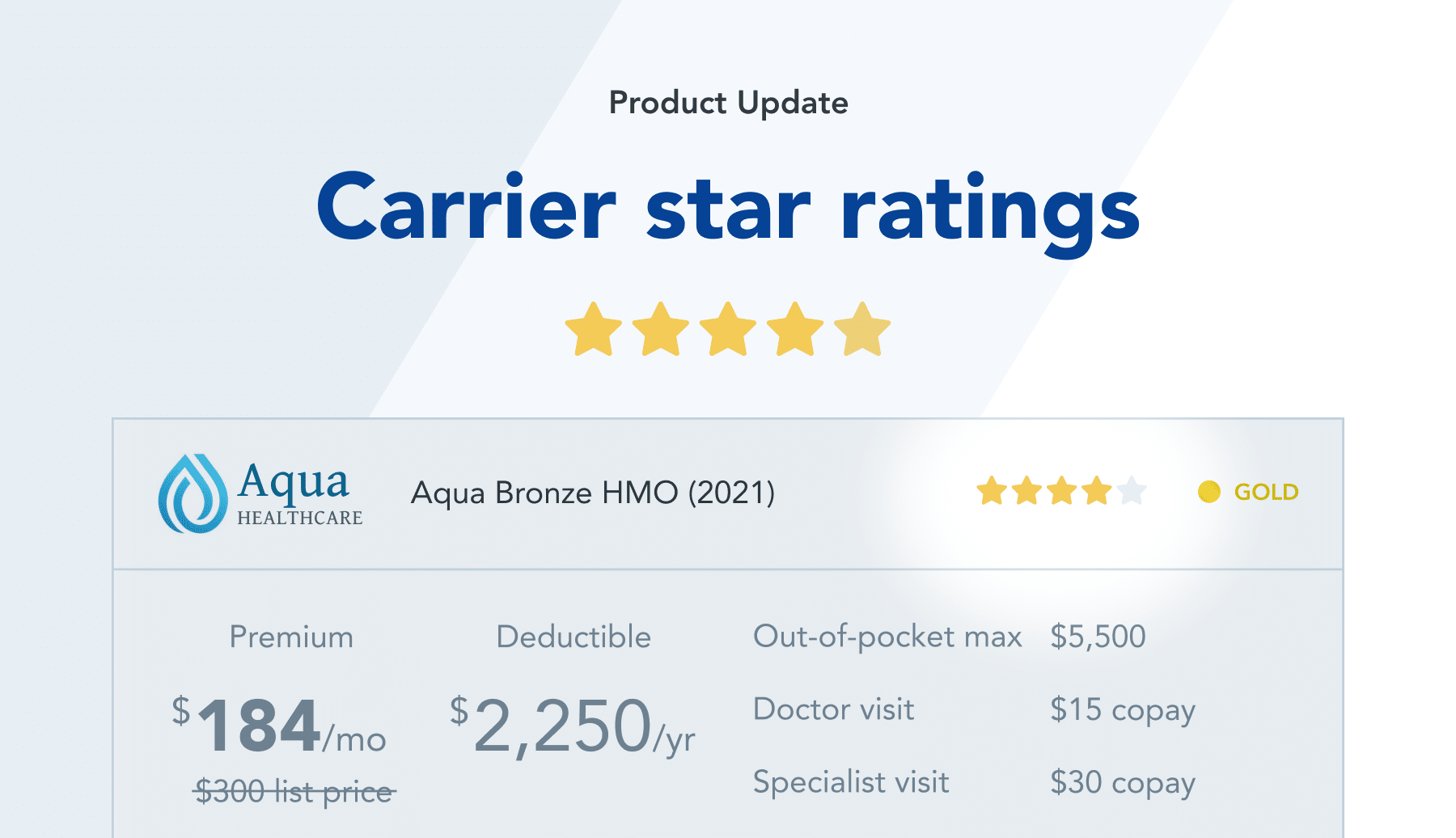
The star ratings on HealthCare.gov are not crowd-sourced retail reviews. The federal Quality Rating System (QRS) scores Marketplace health plans on a 1-to-5 star scale using clinical quality measures and enrollee survey results that insurers report to CMS. Filtering for 4-star and 5-star policies is a quick way to focus on plans that scored well on medical care, member experience, and plan administration. Ratings are one useful signal, not a guarantee about how any single claim will be handled.
When consumers log into HealthCare.gov or a state-based exchange, the default sorting algorithm prioritizes one single financial variable: Lowest Monthly Premium. While minimizing monthly cash outflow is essential, sorting strictly by premium often funnels patients directly into poorly managed health plans.
Some policyholders enroll in the cheapest Silver or Bronze plan on the exchange and later run into administrative frustration: long customer service waits, prior authorization delays, and difficulty getting timely specialist appointments. What looked like a small monthly saving can turn into a financial and emotional drain when medical needs arise.
To help consumers identify well-run insurers, the Centers for Medicare & Medicaid Services (CMS) mandates the display of objective, data-driven plan quality ratings. By knowing how to use HealthCare.gov’s quality filter tools, you can identify plans that combine affordable premiums with responsive customer service and reliable clinical care.
1. The Anatomy of CMS Quality Star Ratings: What the Stars Actually Measure
The Quality Rating System (QRS) evaluates qualified health plans (QHPs) across three foundational clinical and administrative pillars. Insurers must submit audited data to CMS annually to earn their scores:
Evaluation Matrix: The 3 Core Pillars of ACA Quality Ratings
| Evaluation Pillar | Underlying Data Source | What Is Clinically Measured | Weight in Overall Score |
|---|---|---|---|
| Medical Care (Clinical Quality) | HEDIS (Healthcare Effectiveness Data and Information Set) | Screening rates (mammograms, colonoscopies), chronic disease management (diabetes HbA1c control, asthma medication adherence), and childhood immunizations. | Typically the largest share |
| Member Experience | CAHPS (Consumer Assessment of Healthcare Providers and Systems) | Patient-reported ease of getting appointments, specialist referral speed, doctor communication quality, and customer service responsiveness. | A smaller share |
| Plan Administration | Enrollee survey responses and plan-reported quality measures | How well the plan is run, such as customer service, access to needed information, and whether providers order appropriate tests and treatments. | A smaller share (CMS publishes the current method each year) |
Reading the scale: A 5-star rating is the highest score and indicates the plan performed well compared with other rated plans. A 3-star rating is roughly middle of the range, while 1-star and 2-star ratings indicate lower scores on the measured categories. Look at the three category ratings as well as the overall score, because a plan can be strong in one area and weaker in another.
2. How to Deploy HealthCare.gov Filter Tools: A Step-by-Step Guide
Bypassing marketing hype and zeroing in on high-performing carriers on HealthCare.gov requires utilizing the left-hand filtering sidebar during plan selection:
- Complete Household & Subsidy Intake: Enter your ZIP code, household size, and projected Modified Adjusted Gross Income (MAGI) to unlock your Advance Premium Tax Credit (APTC) calculations.
- Access the “Filter Plans” Menu: On the plan results page, navigate to the left sidebar menu (or tap “Filter” on mobile devices).
- Locate the “Quality Rating” Filter: Scroll past metal tiers and plan types until you locate the Overall Quality Rating section.
- Select “4 Stars and Above”: Check the boxes for 4 Stars and 5 Stars. This narrows your results to plans with higher overall quality scores. Filter labels and layout can change from year to year, so look for the quality or star rating option if the wording differs.
- Layer Network & Prescription Filters: Next, expand the “Doctors & Facilities” and “Prescription Drugs” filters. Ensure that the 4-star and 5-star policies you evaluate contract with your specific treating physicians and include your maintenance prescriptions on Tier 1 or Tier 2 formularies.
3. Decoding the “Not Rated” Badge: Red Flag or Fresh Opportunity?
While filtering by quality rating, you will inevitably encounter policies displaying a gray banner that reads “Not Rated” or “New Plan.”
According to HealthCare.gov, a plan may not have a star rating for reasons such as:
- The plan is new and has not been offered long enough to be scored.
- The plan has too few enrollees for the results to be statistically reliable.
- There is not enough data available yet for one or more rating categories.
Practical tip: A “Not Rated” label does not mean the insurer is substandard; it means there is no published score to rely on yet. If you are managing a serious, ongoing health condition, you may prefer a plan with an established rating, or you can do extra homework on an unrated plan by checking its provider network, drug list, and your state insurance department’s complaint information.
4. Balancing Quality Stars Against Net Out-of-Pocket Costs
Filtering for 5-star policies should not blind you to plan design realities. A common trap is selecting a 5-star Bronze plan with an $8,500 deductible when an equally rated Silver plan—enhanced by federal Cost-Sharing Reductions (CSR)—is available for just a few dollars more per month.
When comparing top-rated plans, always cross-reference the Summary of Benefits and Coverage (SBC):
- Formulary Tier Placement: A 4-star plan with a low flat copay for your maintenance medication can cost you less over the year than a 5-star plan that places that same medication behind a high prescription deductible.
- Inpatient Copays vs. Coinsurance: Compare whether emergency and inpatient services require flat per-day copayments or 30% coinsurance. A 4-star plan with predictable, capped copayments often provides superior financial protection compared to a 5-star plan charging open-ended coinsurance.
5. A Worked Comparison (Hypothetical)
The plans and numbers below are hypothetical. They are only meant to show how to weigh a star rating against cost and coverage.
| Feature | Plan A (Hypothetical) | Plan B (Hypothetical) |
|---|---|---|
| Overall rating | 2 stars | 4 stars |
| Monthly premium after tax credit | $60 | $85 |
| Deductible | $5,000 | $4,500 |
| Your primary care doctor | In network | In network |
| Your daily medication | Covered after the deductible | Flat copay before the deductible |
Plan B costs $25 more per month, or $300 more per year. In return, the shopper gets a higher-rated plan, a slightly lower deductible, and a predictable copay for a prescription used every month. For someone who fills that prescription all year, Plan B could easily come out ahead. For someone who takes no medication and rarely sees a doctor, the cheaper plan might still be reasonable. The star rating does not make the decision for you; it helps you decide which plans deserve a closer look.
6. A Five-Step Checklist for Comparing Plans
- Start with an accurate income estimate. Your tax credit and any cost-sharing reductions depend on it, and they change which plans are the best value.
- Apply the quality rating filter. Narrow the list to higher-rated plans first, then widen it only if too few options remain in your area.
- Add your doctors and prescriptions. Use the plan comparison tools, then confirm directly with the doctor’s office and the plan’s own directory and drug list.
- Compare total yearly cost, not just the premium. Add twelve months of premiums to what you would realistically pay for the care you expect to use, and look at the out-of-pocket maximum as your worst-case number.
- Read the Summary of Benefits and Coverage. Check how the plan handles the services you use most. Our guide to reading the Summary of Benefits and Coverage explains each section.
7. Questions to Ask Before You Enroll
- Is my doctor in this exact plan’s network, not just “with the insurer”? (Insurers often offer several networks.)
- Which drug tier is each of my prescriptions on, and does the deductible apply first?
- Does the plan require referrals to see a specialist?
- Which hospitals near me are in network?
- Which of the three rating categories pulled the overall score up or down?
- If the plan is not rated, how long has the insurer offered coverage in my area?
If you see particular specialists or take expensive medications, our article on picking an ACA plan around your doctors and medications goes deeper. If you would like free one-on-one help, see navigators vs. insurance brokers.
8. Common Mistakes to Avoid
- Treating stars like product reviews. The ratings are built from standardized quality measures and surveys. They are not individual customer reviews and do not predict your personal experience.
- Ignoring the category scores. Two plans with the same overall rating can differ on member experience or plan administration.
- Choosing on stars alone. A top-rated plan that does not include your doctor or covers your drug poorly is not the best plan for you.
- Assuming last year’s rating still applies. Ratings are updated, and plans change their networks and drug lists each year. Re-check during every Open Enrollment.
- Skipping Silver plans when you qualify for cost-sharing reductions. Those savings are only available on Silver plans and can lower deductibles and copays substantially.
- Using a look-alike website. Make sure you are on HealthCare.gov or your state’s official exchange before entering personal information.
Frequently Asked Questions
What do the star ratings on HealthCare.gov measure?
They summarize how plans performed on three areas: medical care, member experience, and plan administration. The overall rating combines those categories on a scale of 1 to 5 stars.
Is a 5-star plan always the best choice?
No. It is a sign of strong measured performance, but the best plan for you also depends on the premium, cost sharing, provider network, and drug coverage.
Why does a plan show no rating?
Usually because it is new or has too few enrollees to produce a reliable score. That is not a negative mark by itself, but it means you have less information.
Do state-run exchanges show the same ratings?
Many state exchanges display quality ratings as well, though the display and timing can differ. Check your state exchange’s plan comparison page.
Are these the same as Medicare star ratings?
No. Medicare Advantage and Part D plans have a separate star rating program with its own measures.
The Bottom Line
Health insurance is more than an abstract financial safety net—it is a functional gateway to clinical care. Selecting a policy based solely on the lowest monthly premium can leave families dealing with coverage hassles, limited provider access, and frustrating customer service. By using HealthCare.gov’s quality rating filter, reading the category scores, and verifying network compatibility, you can secure a plan that balances affordability with dependable, high-quality healthcare.