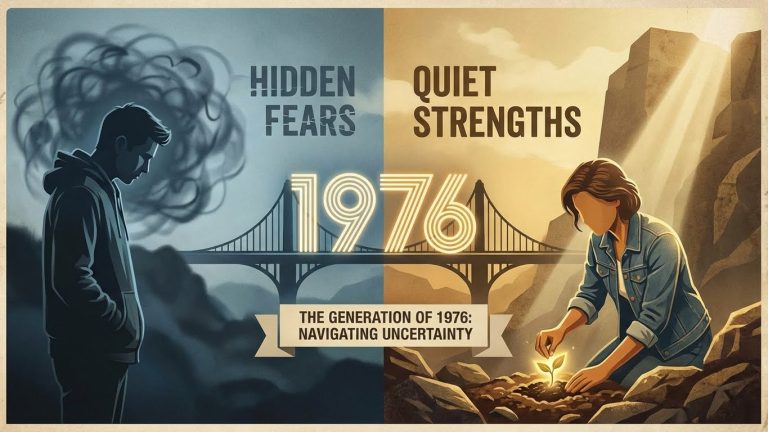
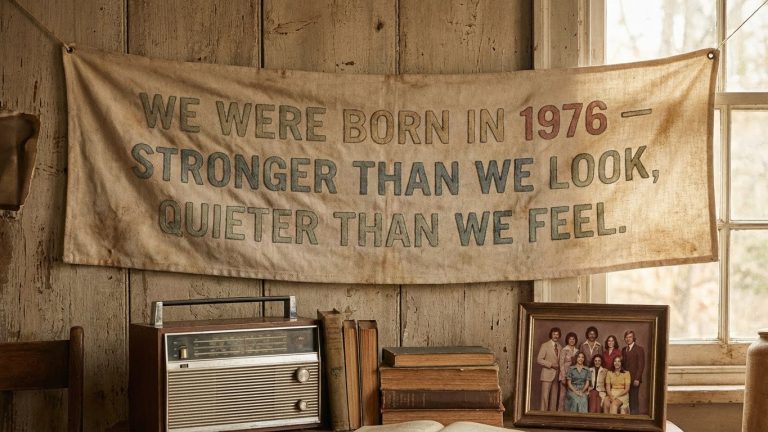
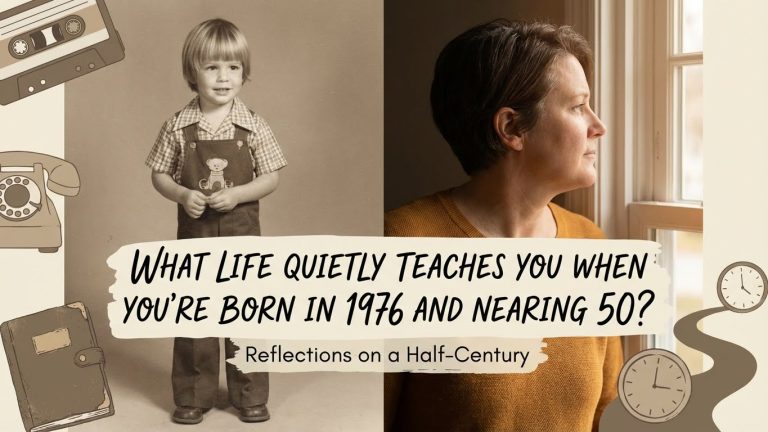
Turning fifty has long been framed as a cliff edge — the beginning of decline, the loss of relevance, the moment when youth officially exits the room. But for those born in 1976, that story no longer fits. This generation has lived through too much, adapted too often, and learned too deeply for fifty to feel like an ending.
For them, turning fifty isn’t a midlife crisis. It’s a reckoning.
A reckoning is quieter than a crisis. It doesn’t explode; it settles in. It asks hard questions instead of dramatic ones. It doesn’t demand reinvention for the sake of appearances — it demands honesty. And for people born in 1976, honesty has been a long time coming.
A Generation Raised Between Worlds
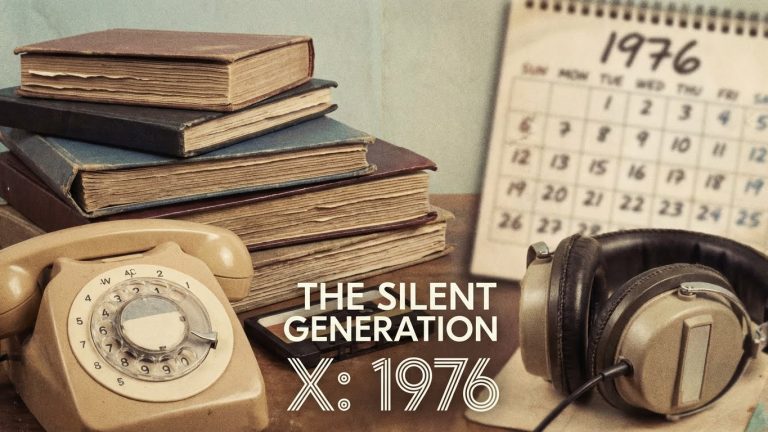
People born in 1976 grew up in the analog world but were forced to master the digital one. They remember cassette tapes, rotary phones, handwritten letters, and getting lost without GPS. They also learned — not as teenagers, but as adults — how to navigate email overload, social media, remote work, and algorithm-driven life.
This dual upbringing shaped something rare: adaptability without illusion.
They know progress is real, but they also know what it costs. They remember slower rhythms, deeper attention, and fewer comparisons. Turning fifty brings that contrast into sharp focus. It becomes impossible to ignore how much life has accelerated — and how much of themselves they gave up just to keep pace.
The reckoning begins here: What parts of me were lost in the rush, and which ones deserve to come back?
The Myth of “Having It All Figured Out” Finally Dies
By fifty, people born in 1976 are supposed to be settled. Career established. Family defined. Identity locked in. But the truth is far messier.
They may have built successful lives that don’t feel like their own anymore. Or sacrificed dreams in the name of responsibility. Or followed paths that made sense at thirty but feel hollow at fifty.
This isn’t failure — it’s clarity.
Turning fifty exposes a truth that’s been quietly forming for years: stability without meaning is its own kind of emptiness. The reckoning isn’t about regret; it’s about refusing to spend the remaining decades pretending.
This generation stops asking, “Is this good enough?” and starts asking, “Is this true to me?”
Emotional Honesty Replaces Emotional Endurance
People born in 1976 were taught to endure. To keep going. To swallow discomfort and carry on. They became experts at functioning — even when something inside them felt misaligned.
At fifty, endurance alone is no longer enough.
The body starts sending clearer messages. The mind grows less tolerant of denial. Emotional exhaustion becomes harder to ignore. The reckoning demands emotional honesty: acknowledging resentment, grief, unmet needs, and long-suppressed desires.
This isn’t weakness. It’s maturity.
For the first time, many allow themselves to say — at least privately — “I can’t live this way anymore.” And instead of panic, there is relief.
Success Is Stripped Down to Its Essentials
By fifty, people born in 1976 have chased success long enough to see through its illusions. Titles change. Money fluctuates. Recognition fades. The applause doesn’t last.
What remains is simpler — and heavier.
Health. Time. Peace. Relationships that feel safe instead of impressive. Work that doesn’t drain the soul. Mornings without dread. Evenings without numbness.
Turning fifty forces a reckoning with what success actually costs. If it requires constant anxiety, broken health, or emotional absence, then it’s no longer success — it’s survival with a nicer label.
This generation begins to choose differently, often quietly, without announcements or explanations.
The Body Becomes a Truth Teller
At fifty, the body stops cooperating with denial. Recovery takes longer. Fatigue lingers. Stress leaves visible marks.
For people born in 1976, this isn’t about vanity — it’s about awareness. The body becomes a truth teller, exposing lifestyles and choices that no longer align with reality.
The reckoning here isn’t fear of aging. It’s respect for limits.
They begin listening instead of pushing. Rest instead of proving. Maintenance instead of neglect. Not because they’ve given up — but because they finally understand that longevity requires care, not conquest.
Relationships Are Re-evaluated Without Apology
Turning fifty sharpens relational clarity. People born in 1976 have loved deeply, compromised often, and stayed longer than they should have — in friendships, family dynamics, and partnerships that demanded silence in exchange for belonging.
At fifty, the tolerance for emotional labor without reciprocity disappears.
This isn’t cruelty; it’s discernment.
They stop chasing approval. They stop explaining themselves to those committed to misunderstanding them. They choose fewer relationships — but truer ones.
The reckoning asks: Who brings peace, and who brings confusion? The answer determines who stays.
The Weight of Responsibility Finally Gets Questioned
This generation has spent decades being responsible — for parents, children, work, stability, and emotional balance. They became the “reliable ones,” often at the expense of their own needs.
At fifty, a quiet rebellion emerges.
Not against responsibility itself, but against the assumption that their lives exist primarily to hold everything together for everyone else.
The reckoning asks a dangerous question: What do I want, separate from what’s expected of me? And once that question is asked, it cannot be unasked.
Regret Is Reframed as Wisdom
By fifty, people born in 1976 carry regrets — everyone does. But instead of drowning in them, something shifts.
Regret becomes data.
They see patterns clearly now: where they ignored intuition, stayed silent, settled too soon, or waited too long. Instead of self-punishment, there is understanding.
The reckoning isn’t about fixing the past — it’s about not repeating it.
This generation becomes deeply intentional, guided less by hope and more by earned insight.
The Fear of Judgment Loses Its Power
One of the quietest yet most liberating changes at fifty is this: other people’s opinions start to matter less.
People born in 1976 have spent decades performing roles — employee, parent, partner, provider — under constant evaluation. At fifty, the exhaustion of performance outweighs the fear of judgment.
The reckoning allows for authenticity without apology.
They may dress differently. Speak more honestly. Leave spaces that no longer fit. Say no without explanation.
Not because they’ve become careless — but because they’ve become free.
Legacy Replaces Image
At fifty, the question shifts from “How do I look?” to “What do I leave behind?”
For people born in 1976, legacy isn’t about fame or recognition. It’s about impact. Integrity. The way they treated others. The values they lived, not preached.
They begin measuring life in quieter metrics: trust built, harm avoided, presence given, wisdom passed on.
The reckoning clarifies what matters when time feels real instead of theoretical.
A Different Kind of Power Emerges
Turning fifty doesn’t diminish power — it changes its form.
This generation carries lived knowledge, emotional intelligence, and pattern recognition that no shortcut can replicate. They see through manipulation faster. They trust themselves more deeply. They know what doesn’t work.
This is not the power of ambition. It’s the power of alignment.
And it’s dangerous in the best way — because it can no longer be easily controlled by fear, urgency, or external approval.
Fifty Is the Beginning of Truthful Living
For those born in 1976, fifty is not the end of youth — it’s the end of pretending.
Pretending to be fine. Pretending to want what they were told to want. Pretending that endurance equals fulfillment.
The reckoning invites a different life: slower, truer, quieter — and far more powerful.
Not everyone will see the transformation. Not everyone needs to.
Because this phase isn’t about being understood.
It’s about finally being honest — with time, with limits, and most importantly, with oneself.
And in that honesty, people born in 1976 don’t find crisis.
They find clarity.