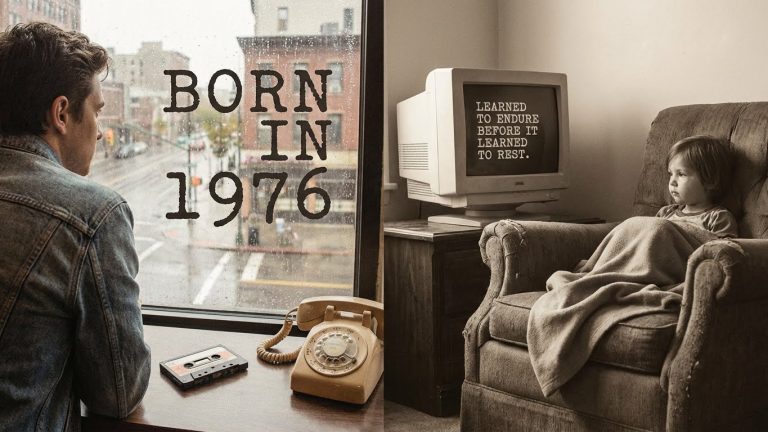
Introduction: The Bicentennial Babies
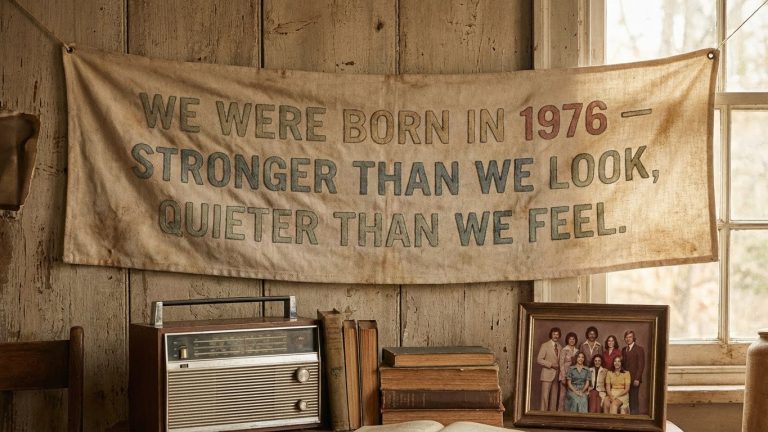
If you were born in 1976, your entry into the world coincided with America’s 200th birthday game. There were fireworks, tall ships in the harbors, and a pervasive sense of looking backward at history while standing uncertainly on the threshold of the future.
That uncertainty became your birthright.
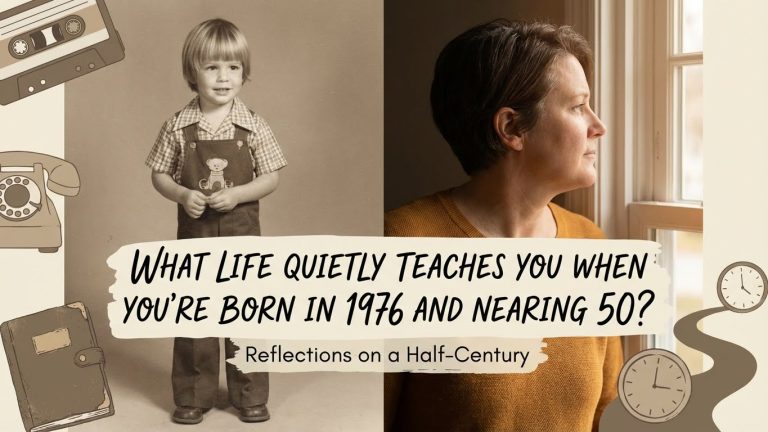
You are now hovering around the late-40s mark. It is a vantage point that offers a spectacular, often dizzying view of how much the world has changed in a single lifetime. You are firmly Generation X—specifically, late-stage Gen X—but those labels feel inadequate to describe the specific texture of your existence.
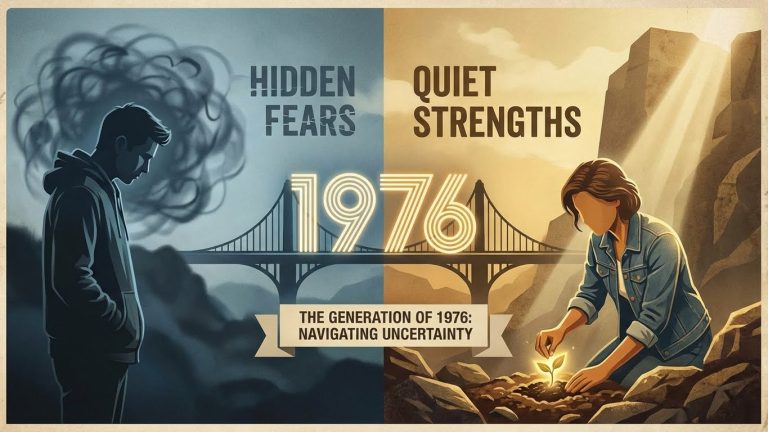
You are not the cynical slacker caricature of the early 60s Gen Xers, nor are you the optimistic, digital-native Millennial that followed. You are something else entirely. You are the “Bridge Generation.” You have one foot planted firmly in an analog past that feels like ancient history to your children, and the other foot sliding precariously on the accelerating treadmill of the digital future.
Most demographers and cultural commentators overlook you. They group you in broad strokes. But this article sees you. It understands that your timeline is unique because you lived through the most profound technological paradigm shift in human history during your most formative years. You didn’t just read about the transition from industrial to informational society; you grew up in the fissure between them.
Phase One: The Texture of an Analog Childhood (1976–1989)
To understand a 1976 baby, you must understand the silence of the 1980s suburban afternoon.
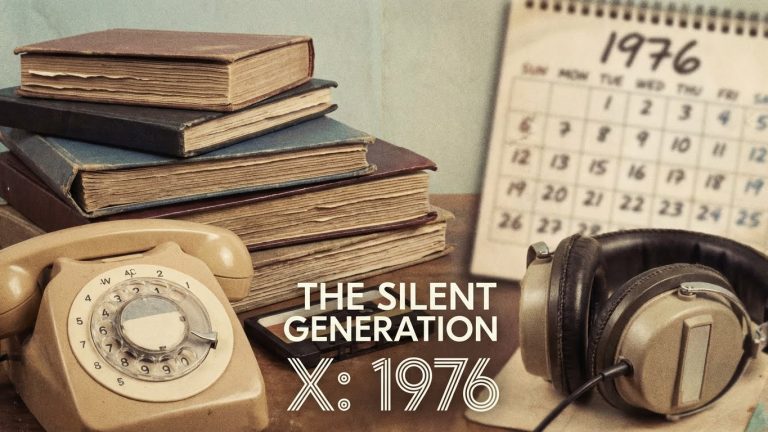
Your childhood was defined not by what you had, but by what was absent. There was no internet. There were no mobile phones. There were only three or four television channels, and if the President was giving a speech, there was nothing else on.
This absence created space—vast amounts of unsupervised, unstructured time.

The Cult of Independence and the Latchkey Kid
By the time you were ten years old in 1986, you possessed a level of autonomy that would terrify a modern parent. You were likely a “latchkey kid,” a term defining a generation wearing house keys around their necks on shoestrings, letting themselves into empty houses after school.
This wasn’t neglect; it was the cultural norm. You learned to navigate the hours between 3:30 PM and 6:00 PM alone. You made microwave nachos, you did your homework in front of reruns of Gilligan’s Island, and you were told simply to “be home when the streetlights come on.”
This era wired your brain for self-reliance. If you wanted to know something, you couldn’t Google it; you had to ride your bike to the library or find someone who knew. If you got a flat tire three miles from home, you walked it back. You learned to sit with boredom, a sensation that has all but vanished from modern life. That boredom was the crucible of your imagination, forcing you to invent games, build forts, and inhabit your own mind.
The Tangible Pop Culture
Your early cultural imprints were profoundly physical. You didn’t stream content; you owned objects.
You remember the visceral thrill of the Star Wars action figure aisle at Toys “R” Us. You know the specific plastic smell of a newly opened Atari 2600 cartridge. Saturday morning cartoons weren’t an on-demand option; they were a scheduled ritual, a communal experience shared simultaneously by millions of other kids eating sugary cereal.
Because entertainment was scarce, you cherished it differently. You listened to vinyl records or cassette tapes from start to finish, reading the liner notes until the paper wore thin. You didn’t just consume culture; you inhabited it because it was the only culture you could access.
By the late 80s, you were barely entering puberty, just in time to witness the Berlin Wall fall on television. The great existential threat of your childhood—the Cold War nuclear winter—evaporated almost overnight, leaving a strange geopolitical vacuum just as you were entering the most turbulent phase of your life.
Phase Two: The Golden Age of Adolescence (1990–1995)
If you were born in 1976, the 1990s belong to you more than anyone else. You turned 14 in 1990 and 20 in 1996. Your entire adolescence was contained within the pre-9/11, pre-social media bubble of the ’90s.
Looking back now, it feels like a lucid dream—a golden era of economic prosperity, relative peace, and an explosion of youth culture that hasn’t been matched since.
The Soundtrack of Your Awakening
Music in the early 90s wasn’t background noise; it was tribal identity. You were coming of age right as hair metal died a sudden, spectacular death, replaced by something rawer and more authentic to your burgeoning teenage angst.
You remember exactly where you were the first time you heard Nirvana’s “Smells Like Teen Spirit.” It didn’t just sound good; it felt like someone had finally articulated the vague dissatisfaction you felt with the glossy, superficial 80s. Whether you aligned with Grunge, the Golden Age of Hip Hop (A Tribe Called Quest, Tupac, Biggie), or the emerging rave scene, music was the primary vehicle for your emotional development.

The Mixtape as Love Language
Before playlists and algorithms curated your feelings, you had the mixtape.
To be born in 1976 means you understand the profound labor of love involved in creating a mixtape for a crush or a best friend. It required sitting by the radio to catch a song, or painstakingly dubbing from CD to tape, calculating the remaining time on Side B so the last song didn’t cut off.
The mixtape was a physical manifestation of your inner world, handed to another person. It was vulnerable. It was tangible. It was a form of communication that digital playlists simply cannot replicate.
The Last Days of Privacy
Crucially, your teenage years were undocumented. This is the greatest gift history bestowed upon you.
When you did stupid things at a high school party in 1993, there were no smartphones to record it. There was no Facebook to broadcast your bad haircuts or regrettable fashion choices (though the plaid flannel was glorious). Your mistakes evaporated into the ether of memory, shared only as exaggerated stories among friends.
You possessed true privacy. You could reinvent yourself over a summer break because nobody was tracking your every move. You learned to socialize without a screen as a buffer, navigating the awkwardness of face-to-face rejection and the thrill of unfiltered connection. You are the last generation whose youthful indiscretions are not archived in a data center in Utah.
Phase Three: The Great Crossing—Young Adulthood and the Digital Dawn (1996–2005)
You graduated high school around 1994 and likely finished college or entered the workforce earnestly in the late 90s. You were entering adulthood just as the world decided to change everything.
You are the “Oregon Trail Generation” in the truest sense. You learned typing on an Apple IIe in school, but you wrote your college papers on the first wave of personal computers. You remember life before email, and you remember the thrilling, screeching sound of a 56k modem connecting you to the nascent World Wide Web.
The AOL Gateway
For you, the internet didn’t begin as an omnipresent utility; it was a destination. You “went online.” It involved sitting at a desk, logging into AOL, hearing the “You’ve Got Mail” guy, and entering chat rooms to talk to strangers in a way that felt futuristic and slightly dangerous.
You were the first generation to attempt dating online, perhaps through early sites like Match.com or just through ICQ messenger. You navigated the clumsy transition from landlines to pagers to giant Nokia brick phones that could only make calls and play Snake.
You learned the digital world as an adult, not as a native toddler. This means you speak it fluently, but with an accent. You understand the mechanics, but you still remember why it’s miraculous that you can send a photo across the world in seconds.
The Pivot Point: 9/11
You were 25 years old on September 11, 2001.
You were old enough to understand the geopolitical implications immediately, but young enough that it fundamentally reshaped your view of the future. The optimistic bubble of the 90s—the “End of History” narrative where liberal democracy had won—burst in a single morning.
Your young adulthood was cleaved in two: the carefree ’90s and the anxious post-9/11 world of surveillance, war, and economic turbulence. You navigated your critical career-building years during the dot-com bust and the subsequent recovery, only to run headlong into the 2008 financial crisis just as you were buying homes or starting families.

Phase Four: The View from Midlife—The Squeeze of 48 (Present Day)
So here you are, approaching the half-century mark. You are the seasoned veterans of change.
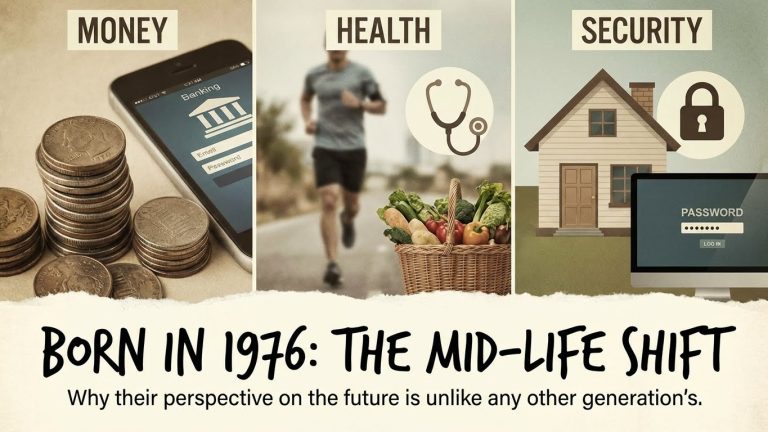
If you were born in 1976, your current life is likely defined by being squeezed from both sides. You are the classic “Sandwich Generation.”
The Parental Pivot
You are likely watching your parents—the Boomers who seemed invincible and omnipotent during your childhood—begin to slow down. You are navigating their health scares, their stubborn refusal to adapt to technology, and the devastating reversal of roles where you become their caretaker.
Because you were raised to be self-reliant, you often shoulder this burden silently. You manage their doctor appointments via portals they don’t understand, while simultaneously trying to manage your own household.
Parenting the Digital Natives
If you have children, they are likely digital natives—Gen Z or Alpha. There is a profound, sometimes heartbreaking chasm between how you grew up and how they are growing up.
You try to explain to them what it was like to leave the house without a phone, to wait a week for photos to be developed, or to have to be home at a certain time to watch a TV show. They look at you like you are describing life in the 1800s.
You are constantly warring with yourself about their screen time. You know the value of the boredom you had as a child, but you also know they cannot survive socially without participating in the digital world. You are the bridge parent, trying to translate analog values into a digital reality, often feeling like you are failing at both.
The Digital Fatigue
Perhaps the most defining characteristic of being born in 1976 right now is a profound sense of digital fatigue.
You were enthusiastic adopters of technology in your 20s. You loved the first iPod, you signed up for Facebook early, you embraced the smartphone. But now? Now you see the darker side.
You remember the ability to truly disconnect, and you miss it with a physical ache. You are tired of the constant notifications, the demand for immediate availability, the erosion of work-life boundaries that the smartphone created.
You are the generation most likely to fantasize about throwing your iPhone into a river and buying a cabin in the woods, even though you know you’d miss Spotify within an hour. You are caught between the convenience of the present and a deep nostalgia for the slower rhythms of the past.

Conclusion: The Essential Connector
Why does this article understand you better than most people? Because it recognizes that your birth year isn’t just a number; it’s a passport to a vanishing world.
Being born in 1976 means you possess a bilingual brain. You speak Analog and you speak Digital. You understand the patience required to research something in an encyclopedia, and you understand the dopamine hit of an Instagram like.
You are the repository of the last era of human existence before we became a hive mind. You remember what it felt like to be truly alone, truly bored, and truly private.
As you move into the second half of your life, your role becomes vital. You are the interpreter. You are the ones who can explain to the younger generations why certain human experiences—slow conversation, tangible media, deep focus—are worth preserving. And you are the ones who can help the older generations navigate the confusing new world without losing their dignity.
Don’t let the world overlook you as just another cynical Gen Xer. Your cynicism is earned, but beneath it lies a unique resilience forged in the latchkey afternoons of the 80s and the optimistic explosion of the 90s.
You made the crossing from the old world to the new. You survived it. And as you stand here at 48 or 49, looking back at the incredible distance you’ve traveled, take a moment to appreciate the unique, complex, and historically significant vantage point of being a Bicentennial Baby. You are the bridge, and the bridge is holding strong.