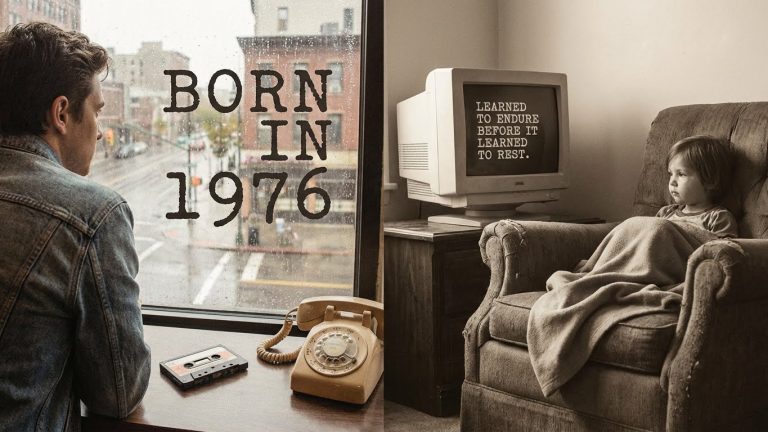
Introduction: The Hinge of History
To be born in 1976 is to be a member of a very specific, almost mystical fellowship. In the West, we were the “Bicentennial Babies,” arriving amidst fireworks and a newfound sense of national recovery. In the East, we were the “Fire Dragons,” born under a sign of immense power, ambition, and resilience.
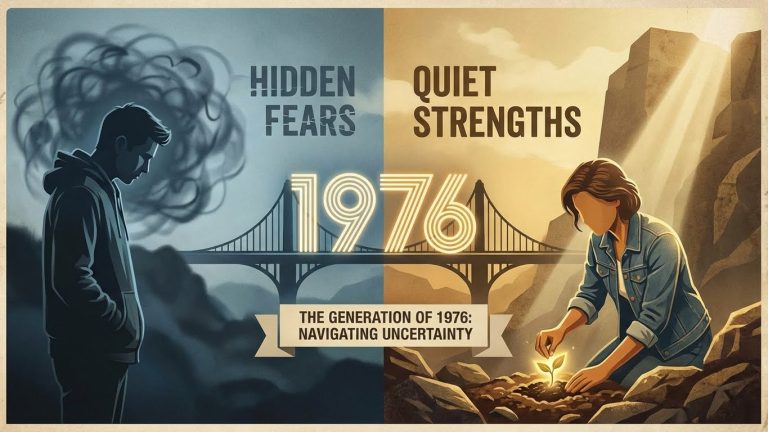
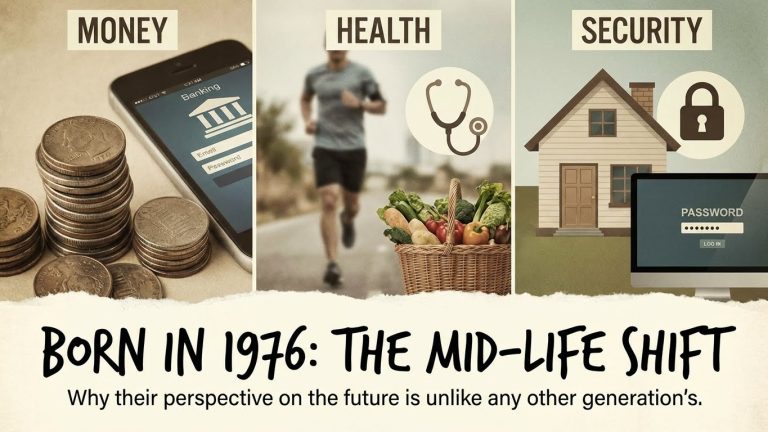
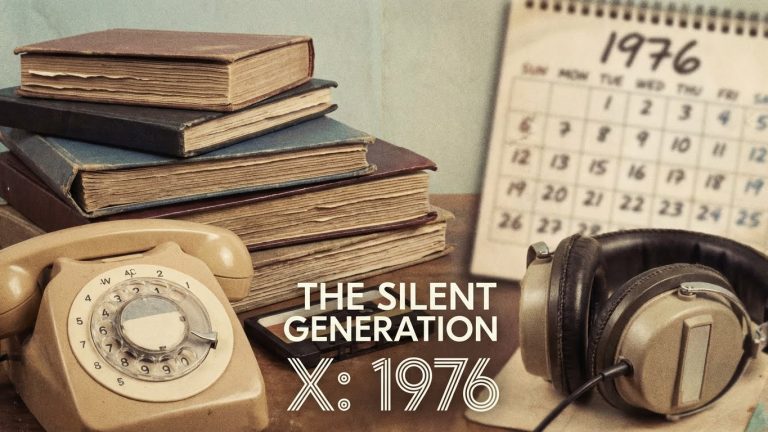
But as we approach the milestone of 50, we don’t feel like mythical creatures or national monuments. We feel like the people who keep the world running while everyone else is arguing. We are the core of Generation X—the forgotten middle children of history. We are the bridge between the rotary phone and the smartphone, between the library card and the AI algorithm.
The world sees us as stable, perhaps a bit cynical, and remarkably low-maintenance. They see the “stronger than we look” exterior. But they rarely hear what is happening inside. We are a generation that was taught to process the world in silence. We are quieter than we feel, carrying a depth of experience that we rarely broadcast, because we were raised to believe that the world doesn’t stop for your feelings—it only stops when the work isn’t done.

I. The Latchkey Forge: Why We Are Stronger Than We Look
The strength of the 1976er was not built in a gym; it was built in the empty living rooms of the late 1970s and early 80s.
The Apprenticeship in Autonomy
We were the definitive “Latchkey Kids.” By the time we were eight or nine, we carried a brass key on a string around our necks. We let ourselves into quiet houses. We fixed our own snacks (usually something that involved a toaster oven or a microwave). We started our homework without being prodded by an app or a tutor.
This wasn’t neglect; it was an apprenticeship in autonomy. While modern parenting focuses on “bubble-wrapping” childhood, our childhood was a series of small, daily tests of competence.
- If the power went out, we found the flashlight.
- If we were bored, we rode our bikes until the streetlights came on.
- If we got into a fight with a friend, we worked it out on the sidewalk, not through a parent-monitored group chat.
The Internalized Solution
This upbringing created a “Figure It Out” (FIO) reflex. We look stronger than we are because we’ve been solving our own problems since the second grade. When a crisis hits today—a corporate layoff, a health scare, a global pandemic—our default setting isn’t panic. It’s triage. We look for the tools, we assess the damage, and we start the repairs. We don’t ask “Why is this happening to me?” We ask “What is the next logical step?”
II. The Analog Heart: Why We Are Quieter Than We Feel
If our childhood gave us strength, our adolescence gave us our silence. We are the last generation to have a fully analog youth.
The Luxury of Private Mistakes
We graduated high school in 1994. Our most embarrassing moments, our first heartbreaks, and our experimental phases are not archived on a server in Silicon Valley. They exist only in our memories and a few grainy Polaroids tucked away in a shoebox.
Because we didn’t have to “perform” our lives for an audience of hundreds, we learned to process our emotions internally. We didn’t “post” about our grief; we sat in our rooms and listened to The Downward Spiral or Automatic for the People. We learned to sit with ourselves.
The “I’m Fine” Reflex
This privacy created a paradox. We feel deeply—perhaps more deeply than the generations that “overshare”—but we have no practiced mechanism for broadcasting it. When someone asks a 1976er “How are you doing?”, the response is almost always “I’m fine” or “I’m hanging in there.”
Beneath that “I’m fine” is often a sea of complexity: the stress of a mortgage, the grief of losing a parent, the anxiety of a changing world. But we are quiet because we were raised to believe that venting is a luxury, while enduring is a necessity. We don’t want to be a burden. We’ve been “handling it” since 1984, and we aren’t about to stop now.

III. The Grunge Soul: The Philosophy of Irony and Truth
The mid-90s were our formative years. We were the “Slacker” generation, defined by flannel shirts and a pervasive sense of irony.
From “Whatever” to “What Matters”
In our 20s, our favorite word was “Whatever.” It was a shield against a world that felt increasingly plastic and corporate. But as we approach 50, that irony has melted away, leaving behind a hard core of Truth.
We’ve lived through enough “once-in-a-lifetime” events—the fall of the Berlin Wall, 9/11, the 2008 crash, the COVID era—to see through the noise. We have a “bullshit detector” that is second to none. At 50, we aren’t interested in the “Noise” of social media trends or corporate buzzwords. We are interested in:
- Authenticity: Does this person mean what they say?
- Competence: Can this person actually do the job?
- Presence: Are you actually here with me, or are you on your phone?
We are quiet because we are busy filtering. We are observing. We are waiting for the noise to die down so we can speak the truth.
IV. The Sandwich Pressure: The Strength of the Pivot
Currently, those born in 1976 are in the most physically and emotionally demanding phase of the human lifecycle. We are the Sandwich Generation.
The Double-Sided Responsibility
We are the “Pivot Point” for our families:
- The Upward Pressure: Our parents (Baby Boomers) are entering their late 70s and 80s. We are navigating the “Truth” of their decline—managing medications, doctors’ appointments, and the heartbreaking realization that the people who were our pillars are now leaning on us.
- The Downward Pressure: Our children (Gen Z and Alpha) are navigating a world of unprecedented digital anxiety. We are trying to teach them the “Analog Strength” we have, while acknowledging that their world is vastly more complex than ours was.
We are the “Engine Room” of society. We are the ones doing the caretaking, the high-level working, and the emotional labor. We are stronger than we look because we have to be. If we fail, the bridge falls.

V. Digital Stoicism: Mastery Without Obsession
A unique trait of the ’76 cohort is our relationship with technology. We are the Digitally Stoic.
Immigrants with Citizenship
We remember life without the internet, but we are fully fluent in it. This gives us a perspective that younger generations lack: We know the “Off” switch exists.
At 50, we are increasingly using our strength to “Opt-Out” of the digital noise.
- We use AI to be more efficient, but we don’t trust it to be human.
- We use social media to stay connected, but we don’t look to it for our self-worth.
- We still value the “Truth” of a physical book, a handwritten note, and a face-to-face conversation.
We are quieter than we feel because we are often the only ones in the room not performing for an algorithm. We are content to be “off the grid” even when we are online.
VI. The Biological Truth: Resilience in the Second Half
As we approach 50, our bodies are sending us “Truths” we can no longer ignore. The “Noise” of our youth—the belief that we were immortal—has been replaced by a quiet, disciplined resilience.
Maintenance as a Spiritual Practice
For someone born in 1976, health is no longer about aesthetics; it’s about Freedom.
- We lift weights so we can keep carrying the load.
- We eat better so we can keep our minds sharp for the challenges ahead.
- We prioritize sleep because we know the battles of tomorrow require a full tank.
We look stronger than we are because we’ve had to learn the “Truth” of our limits. We know how to pace ourselves. We are no longer sprinting; we are running a steady, powerful marathon.
VII. The “Quiet” Crisis: The Risk of the Strong Friend
There is a danger in being “stronger than we look.” Because we don’t complain, because we handle the “Sandwich” pressure with a shrug, and because we always say “I’m fine,” people forget that we need support too.
The Invisible Struggle
Those born in 1976 are often the “Strong Friends” in their circles. We are the ones everyone calls when things go wrong. But who does the 1976er call?
Our silence can sometimes be a prison. At 50, the quietest part of us is often a deep, existential weariness. We are tired of being the bridge. We are tired of being the pivot.
The Truth for 2026: As we hit 50, our next act of strength must be Vulnerability. We must learn that speaking our truth—admitting we are tired, admitting we are overwhelmed—is not a sign of weakness. It is the only way to ensure the bridge doesn’t crack.

VIII. Conclusion: The Dragon’s Quiet Roar
To the world, we are the reliable, slightly cynical, hardworking 50-year-olds. We are the managers, the caregivers, and the quiet operators. We are stronger than we look because our foundation was poured in a world that required self-reliance. We are quieter than we feel because we were the last generation to value the sanctity of the inner life.
But as we enter our 50th year, our silence is not emptiness. It is Sovereignty.
We have lived through the analog and the digital, the boom and the bust, the noise and the silence. We have nothing left to prove. Our strength is not loud, and our truth does not need to be shouted. We are the 1976 cohort, and we are exactly where we need to be.
The world might not always hear us, but it certainly feels us. We are the engine. We are the anchor. And as the second half of our journey begins, we will keep moving forward—strong, quiet, and true.
The 1976 “Truth” Checklist for Age 50:
- Acknowledge the Load: You are carrying more than your parents did at this age. It’s okay to be tired.
- Value Your Analog Roots: Your ability to focus and solve problems without a screen is a superpower. Use it.
- Speak the Inner Quiet: Find one person you can stop being “fine” for.
- Celebrate the Resilience: You’ve survived every “end of the world” so far. You are built for this.
- Prioritize the Exit: Start planning for your independence, not just everyone else’s.