By Victor Sterling, MS, CHDA | Certified Health Data Analyst & Pricing Arbitrator
Diagnostic Imaging Fee Economics | Technical vs. Professional Component Unbundling Forensics

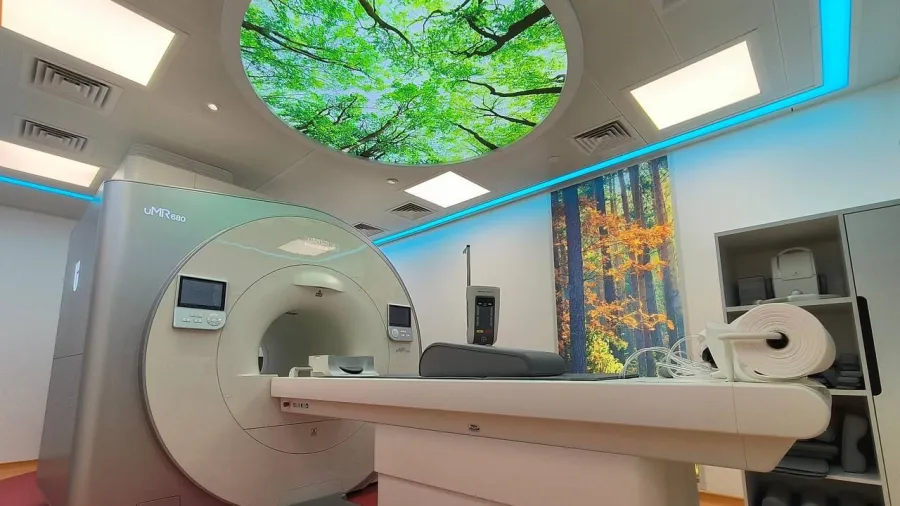
When an orthopedic doctor suspects a torn meniscus or a neurologist investigates recurrent migraines, the routine diagnostic recommendation is an Magnetic Resonance Imaging (MRI) scan. For most patients enrolled in employer-sponsored High Deductible Health Plans (HDHPs), where out-of-pocket deductibles range from $3,000 to $7,000, where you receive that scan is the difference between a minor financial inconvenience and acute financial distress.
If you schedule the scan through your regional hospital’s radiology department, the total billed charges typically reach $2,800 to $4,500. After insurance in-network adjustments, you frequently receive an invoice for $1,800 to $2,600 applied straight to your unmet deductible. Yet drive three miles away to a standalone, independent imaging center, and the exact same lumbar or knee scan—often performed on identical 1.5T or 3.0T Siemens or GE equipment—carries a self-pay cash price of $350 to $600 in full.
Why does clinical imaging experience an immediate 70% to 80% price cliff the moment it moves outside hospital walls? The gap is not driven by image quality, magnet strength, or radiological expertise. It is the direct byproduct of Medicare reimbursement architecture, split-billing mechanics, and hospital overhead allocation algorithms.
1. The Two-Part Bill: Technical Component vs. Professional Interpretation
Every diagnostic imaging encounter consists of two distinct clinical tasks:
- The Technical Component (Modifier -TC): The operational cost of the physical scanner, helium replenishment, technologist labor, power consumption, and equipment depreciation.
- The Professional Component (Modifier -26): The cognitive service performed by a licensed radiologist reading the axial slices and authoring the diagnostic impression report.
When you visit an independent imaging center, the facility typically bills a single Global Fee (or modest separate TC/26 charges) under standard physician fee schedules. Their technical charges are disciplined by commercial market competition, real-estate efficiency, and high scan volume throughput.
When you enter a hospital radiology suite, the facility does not bill on a standard clinic fee schedule. Under Centers for Medicare & Medicaid Services (CMS) Hospital Outpatient Prospective Payment System (OPPS) rules, the hospital unbundles the service. They bill a standard professional reading fee for the radiologist, and then layer on a massive institutional Hospital Outpatient Department (HOPD) Facility Fee under Revenue Code 0610. This facility fee is routinely marked up 500% to 900% above the actual technical operating expense to subsidize general hospital overhead.
Diagnostic Cost Analysis: Lumbar Spine MRI Without Contrast (CPT 72148)
| Billing Component | Independent Freestanding Imaging Center | Hospital Outpatient Radiology Pavilion |
|---|---|---|
| Professional Reading (Modifier -26) | $75 – $150 | $180 – $350 |
| Technical / Equipment Fee (Modifier -TC) | $300 – $450 (Global) | $1,800 – $3,800 (Institutional Facility Fee) |
| Direct Cash / Self-Pay Price | $350 – $550 Total | $1,600 – $2,400 Minimum |
| Typical Insured Out-of-Pocket (Unmet Deductible) | $450 | $1,850+ |
2. Hospital Overhead Allocation and Private Equity Consolidation
Hospitals operate intensive care units, level-one trauma bays, surgical decontamination suites, and around-the-clock emergency staffing. These essential community services run at high operational losses. To balance overall health system balance sheets, revenue cycle executives turn their imaging and laboratory wings into high-margin profit centers.
Furthermore, over the last decade, hospital health systems and private equity management companies have aggressively purchased independent physician practices. When your referring orthopedic doctor’s computer orders an MRI, their Electronic Health Record (EHR) system—often Epic or Cerner—is pre-configured to default routing directly to the hospital’s on-campus imaging network, bypassing cheaper freestanding options without consumer consultation.
3. The Quality Myth: Are Hospital MRIs Better?
A prevalent misconception among patients is that a $3,000 hospital MRI delivers superior clinical resolution compared to a $450 freestanding scan. In clinical reality:
- Identical Hardware: Standalone imaging centers routinely purchase the exact same high-field 1.5 Tesla and 3.0 Tesla wide-bore systems produced by GE Healthcare, Siemens Healthineers, and Philips.
- Standardized Radiologist Groups: In many regional markets, independent centers contract with the exact same local subspecialty radiologist groups that read scans for major academic medical centers via secure picture archiving and communication systems (PACS).
- Accreditation Parity: Reputable freestanding centers hold accreditation from the American College of Radiology (ACR), adhering to identical diagnostic quality, magnetic field calibration, and physicist audit requirements as hospital systems.
4. The 4-Step Action Guide: How to Secure the 75% Discount
To avoid hospital outpatient facility markups on advanced imaging, follow this consumer playbook:
- Demand the Paper / Digital Order Requisition: When your physician orders an MRI or CT, state clearly: “Please provide me with the physical order requisition and CPT code. I will be scheduling the scan at an independent outpatient imaging facility.” Under federal patient choice statutes, physicians cannot mandate that you use their affiliated hospital scanner.
- Verify ACR Accreditation: Visit acraccreditation.org and confirm that the local freestanding facility holds current American College of Radiology accreditation for the specific modality (e.g., Body MRI, Musculoskeletal MRI).
- Compare the Cash Price Against Your Insurer’s Deductible Rate: If your annual insurance deductible is not met, do not reflexively hand over your insurance card. Call the independent center and ask: “What is your all-inclusive self-pay cash price for CPT [5-digit code] including the radiologist reading fee?” Paying $400 cash directly is often far cheaper than allowing the imaging center to bill your insurance at an $850 negotiated rate.
- Obtain the Imaging Disc (DICOM) for Your Surgeon: After the scan, ask the technologist for a CD-ROM or USB drive containing the raw DICOM image files and a printed radiologist report to bring directly to your follow-up appointment, preventing delayed clinical review.
The Bottom Line
Hospital radiology pricing is disconnected from equipment performance and clinical quality. For routine, non-emergency outpatient scans, selecting an accredited freestanding imaging center eliminates thousands of dollars in facility fees, delivers identical diagnostic clarity to your specialist, and protects your household savings.
About the Author: Victor Sterling, MS, CHDA
Victor Sterling is a Certified Health Data Analyst (CHDA) specializing in commercial healthcare fee transparency, diagnostic imaging economics, and outpatient facility fee structures. He consults for consumer advocacy networks and healthcare analytics platforms to dissect hospital chargemasters and identify fair-market clinical pricing benchmarks.
Disclaimer: This article provides general financial education on healthcare diagnostic pricing. It does not constitute formal medical diagnosis, clinical imaging recommendations, or legal counsel. Consult your referring physician regarding clinical diagnostic indications.